



You ever notice how America struts around like it’s the heavyweight champ of the world, pounding its chest about freedom, innovation, and being number one in everything from burgers to bombs? But the second you bring up something as basic as “Hey, who’s watching the rugrats while Mom and Dad are out slaving away to pay the bills?”—poof! That greatness vanishes faster than a politician’s integrity during election season.
In a country that loves to brag about being the “greatest nation on Earth,” it’s wild how quickly that greatness evaporates the moment you ask a simple question: Who’s taking care of the kids while everyone’s working? Suddenly the land of opportunity becomes the land of “figure it out yourself.” We can build trillion-dollar tech companies, colonize the attention span of the entire planet, and invent 14 different subscription services to deliver dog food—but childcare? That’s where we draw the line. That’s where we shrug and say, “Sorry, you’re on your own.”
Parents today are living in a paradox: a society that demands two incomes but provides support systems built for a world where one parent stayed home. And instead of updating the system, we gaslight families into thinking they’re just “bad at balancing things.” No—the system is bad at balancing things. The system is a drunk waiter carrying a tray full of martinis on a cruise ship during a hurricane.
And the worst part? We pretend this is normal. We pretend this is freedom. We pretend this is “how it’s always been.”
But the truth is simpler: America built an economy that depends on parents working, then forgot to build the infrastructure that makes working possible.
Just look at those old black-and-white family photos from the 1950s—Mom in the kitchen, Dad with his briefcase, kids playing in the yard like life was scripted for perfection. That world is dead, buried under dual-income mortgages, student loans, and gig-economy hustle. Yet we’re still running the country on policies that assume Ozzie and Harriet are raising the next generation. Meanwhile, real parents are drowning, and the response from the powers that be? Crickets. Or worse—blame.
It’s a giant con job, folks, wrapped in red, white, and blue hypocrisy, and we’re all paying the tab while the fat cats laugh their way to the nursery they can actually afford.
This isn’t just inconvenient. It’s a national embarrassment. A system so broken it’s practically begging for someone to call it out—and laugh at the absurdity while we do it. Because if we don’t laugh, we might have to admit how badly we’ve screwed this up. And nobody in charge wants that conversation.
If this hits home (or pisses you off in the right way), hit subscribe for the rest of the Uncomfortable America series. Share it with every parent you know who’s quietly losing their mind over daycare bills. Let’s keep dragging these truths into the daylight
TThe Skyrocketing Costs Pushing Families to the Brink
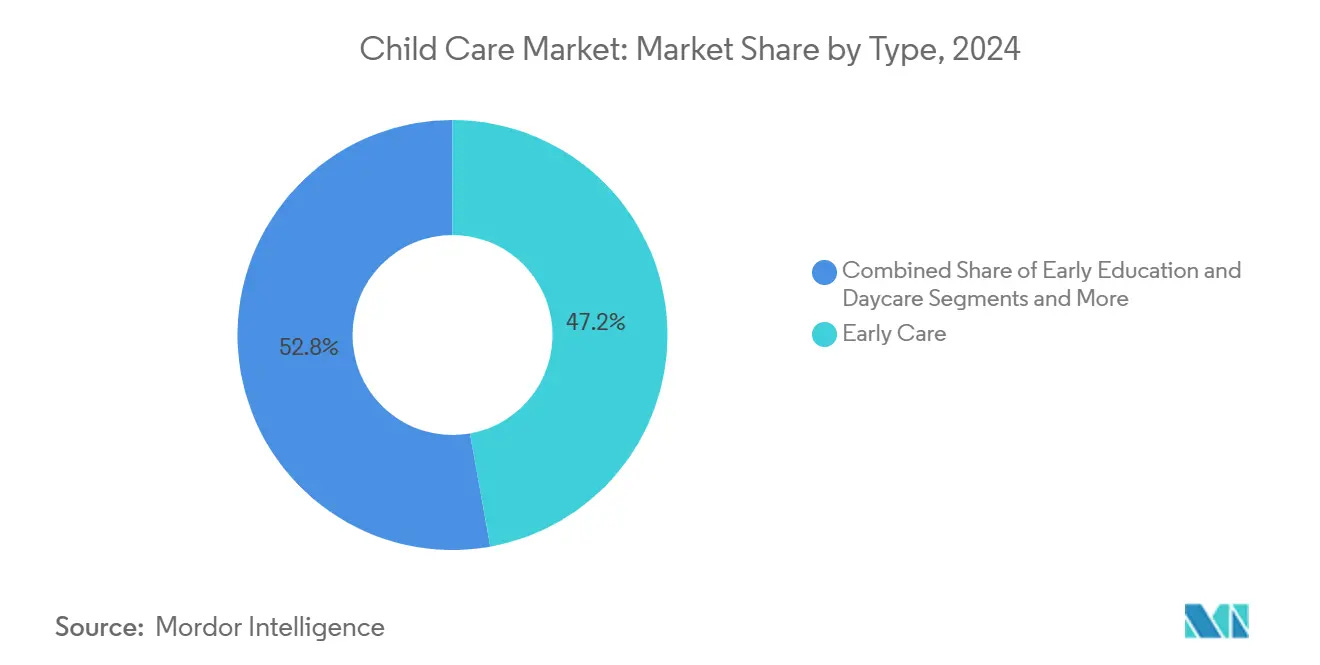
Childcare costs have exploded so dramatically that they now rival and often exceed college tuition in most states. The average cost of center‑based care for an infant is hovering around $15,000 to $20,000 a year, and in major metro areas it can hit $30,000 or more. That’s not “expensive.” That’s “should come with a mortgage broker.”
And the ripple effects are brutal.
More than 52% of mothers say they’ve considered leaving the workforce because childcare is unaffordable or unavailable. That’s not a statistic - that’s a national brain drain. That’s millions of skilled workers sidelined because the country can’t figure out how to watch a toddler for eight hours without bankrupting the parents.
Meanwhile, a third of families report they can’t find childcare that fits their budget at all. Not “it’s tight.” Not “it’s inconvenient.” Literally cannot find anything. Imagine if we treated electricity this way. “Sorry, the grid is full. Try again next year.”
And the financial strain isn’t just monthly — it compounds. Families delay buying homes, having more children, saving for retirement, or even pursuing promotions because the cost of care eats every spare dollar. This is how you widen a wealth gap: make basic life functions unaffordable.
This isn’t a parenting problem. It’s a policy failure masquerading as a personal choice.
For more perspectives on how families are navigating this, read Between Editions: America’s Child-Care Crisis Became an Economic Reckoning and My childcare problem is America’s childcare problem on Substack.
Inadequate Childcare Stunting Early Development
The science is clear: early childhood education is one of the most powerful predictors of long‑term success. Kids who receive high‑quality early learning show better academic performance, stronger social skills, and higher lifetime earnings. But in America, access to that foundation is a coin toss determined by ZIP code and bank account.
Inadequate childcare doesn’t just inconvenience parents… it actively harms children.
Kids in unstable care environments face higher rates of developmental delays, behavioral challenges, and academic struggles. And the disparities start early. By age three, children from low‑income families can already be thousands of words behind their peers in vocabulary exposure. That’s not because parents don’t care — it’s because the system doesn’t.
Underserved communities get hit hardest. Rural areas often have “childcare deserts” where there are literally zero licensed providers within reasonable distance. Urban areas have the opposite problem: too many families competing for too few slots, driving prices into the stratosphere.
We talk about “investing in the future,” but we won’t invest in the stage of life where the future is actually shaped.

Dive deeper with Substack articles like What I Told CBS Sunday Morning About Child Care and Yes, But Really, Convince Me WHY We Need Child Care?.
America Lagging Behind Global Standards
Let’s talk global comparisons, because nothing exposes American dysfunction like looking at literally any other developed country. This isn’t just a child care issue this is literally every issue but I won’t get into that now…
Scandinavian nations? Universal childcare.
France? Subsidized early education starting at age three.
Germany? Government‑backed childcare with capped costs.
Japan? National childcare guarantee.
Canada? $10‑a‑day childcare rolling out nationwide.
Meanwhile, in the United States, parents are paying $10,000 to $20,000 per year per child, and that’s considered “middle of the road.” In some states, childcare costs more than rent. In others, it costs more than the median annual income for a single parent.
And here’s the kicker: countries with strong childcare systems see higher workforce participation, stronger GDP growth, and better gender equity. They’re not doing this out of charity — they’re doing it because it works.
America isn’t behind because we lack the resources.
We’re behind because we lack the political will.
For related reads, check out Must We Support Paid Childcare? and How Five States Are Stepping Up to Alleviate the Child Care Crisis on Substack.
This Substack is reader-supported. To receive new posts and support my work, consider becoming a free or paid subscriber. Links in footer, if you prefer a PayPal one time donation.

Join Rxan Smith’s subscriber chat
Available in the Substack app and on web
The Staggering Economic Ripple Effects
The childcare crisis isn’t just a family issue — it’s an economic sinkhole.
The U.S. loses an estimated $122 billion every year due to parents missing work, reducing hours, or leaving jobs entirely. That’s not a rounding error. That’s a self‑inflicted recession.
Businesses suffer from turnover, talent shortages, and reduced productivity. Entire industries — healthcare, education, retail, tech — are bleeding workers because the cost of childcare makes employment mathematically impossible.
And here’s the irony: the same politicians who scream about “getting people back to work” are the ones blocking the policies that would actually make that possible. You can’t demand a robust workforce while ignoring the infrastructure that supports it.
Childcare isn’t a “social program.”
It’s economic policy.
Explore more in Substack posts such as Will The Bigger Childcare Tax Credit Solve America’s Childcare Crisis? and Global Care in Crisis: The Economic Fallout of Unstable Care Systems.
Baked-In Gender Inequality
Childcare is where gender inequality stops being theoretical and becomes painfully measurable. Women are far more likely to reduce hours, turn down promotions, or leave the workforce entirely because the system assumes they’ll absorb the burden.
This isn’t about “choice.”
It’s about structural design.
When childcare costs more than a woman’s salary, the math forces her out of the workforce. And once she leaves, re‑entry becomes harder, wages stagnate, and the gender pay gap widens. It’s a cycle engineered by neglect.
Meanwhile, men are rarely penalized in the same way. Society still treats fatherhood as a footnote and motherhood as a full‑time job. Until childcare is treated as a shared societal responsibility, gender equality will remain a slogan, not a reality.

Read insightful takes on Substack like Here’s the real reason Americans stopped having kids and Struggling Parents, Struggling Economy: The Connection We Can’t Afford to Ignore.
The Undeniable Link to Poverty
For low‑income families, the childcare crisis isn’t an inconvenience. It’s a trapdoor.
1.2 million parents miss work every month due to unreliable childcare. That instability cascades into job loss, reduced hours, food insecurity, housing instability, and generational poverty.
Kids who need early support the most are the least likely to get it.
That’s not a coincidence.
That’s a system functioning exactly as designed.
In rural areas, childcare deserts make access nearly impossible. In urban areas, long waitlists and high prices shut families out. And when federal funds expire, millions of children risk losing care entirely.
If you wanted to design a system that keeps poor families poor, you’d build this one.

For further reading, see Substack articles including 3.2 Million Children Likely to Lose Their Child Care with the End of Federal Funds and A National Security Issue: Child Care Increasingly a Challenge for Military Families.
Viable Solutions Within Reach
Here’s the part that should make everyone furious: we know how to fix this.
We’ve known for decades.
Federal investment in childcare providers.
Universal pre‑K.
Living wages for childcare workers.
Tax credits that actually cover the cost of care.
State‑level expansions that stabilize the sector instead of patching holes.
These aren’t radical ideas. They’re proven models used worldwide. The only thing missing is the political courage to implement them.
Childcare isn’t a luxury.
It’s infrastructure. It’s economic fuel. It’s national security.
It’s the foundation of everything else we claim to care about..

Discover more solutions-oriented content on Substack, such as The New Year’s Child Care Freeze: A Primer and THE RESTACK: The Moral Argument for Fixing Child Care.
RXAPPING UP
If you’re going to keep bragging that America is the greatest country on Earth, you have to actually act like you give a damn about the people who are supposed to grow up and run it someday.
Look, I get it. We love our exceptionalism. We love saying we’re number one. But when your number-one status comes with daycare that costs more than Harvard, parents quitting jobs they can’t afford to lose, and an economy that quietly bleeds talent because nobody can figure out who’s watching the kids—you don’t get to keep calling yourself exceptional. You’re just loud.
Here’s the deal in plain English: We built a country that runs on two-income families, then we refused to build the support system that makes two incomes possible. We did the economic equivalent of buying a Ferrari, then refusing to put gas in it because “personal responsibility.” And when the car stalls in the middle of the highway? We blame the driver for not being committed enough.
Stop pretending this is a personal failing. It’s not. It’s public policy malpractice on a national scale. Other countries figured this out decades ago… paid leave, subsidized care, universal pre-K… and somehow they didn’t turn into Venezuela. They just turned into places where parents don’t have to choose between feeding their kids and keeping their job.
We’re not broke. We’re not helpless. We’re just choosing not to care. And every time we choose not to care, we’re not just screwing over today’s exhausted parents—we’re screwing over tomorrow’s doctors, engineers, teachers, and taxpayers. Congratulations, America: we’re eating our seed corn and calling it freedom.
So yeah, maybe it’s time we stopped measuring greatness by aircraft carriers and stock tickers, and started measuring it by whether a working mom can drop her toddler off at a safe, affordable place without crying in the parking lot. Because if we can’t even get that right, the rest of the bragging is just noise.
I’m Rxan Smith - Happy Monday
Subscribe if you want more of these uncomfortable truths delivered straight… no chaser. Share if you know someone who’s tired of pretending this system works. Let’s stop laughing at the problem and start fixing it..
Connect With Rxan Smith Across the Web
📺 YouTube🐦 X (Twitter)📸 Instagram (Main)📸 Instagram (Alt)🧵 Threads (Main)🧵 Threads (Alt)📘 Facebook☕ Buy Me a Coffee💰 PayPal🎭 Patreon
The Complete Series — All 25 Episodes
rxansmith.substack.com · YouTube: @RealRxanSmith · X: @rxannsmith
— Rxan Smith
Uncomfortable
Making America Grow Again, One Uncomfortable Truth at a Time


