



America isn’t on the verge of civil war because we’re too divided to function. We’re on the verge because the people at the top figured out that if we’re busy fantasizing about shooting each other, we’ll never aim at them.
That’s the whole trick: keep the peasants in a 24/7 culture‑war slap fight so the donor class can loot the place like it’s the last chopper out of Saigon.
If you missed Part 1 of 2 in my rally cry for revolution, the link is 👇
The Last Trick in the American Experimental Deck (Part 1 of 2)

Oh, America — you bloated carnival of endless breadsticks and bottomless salads, where the Olive Garden stands as the high altar of our corporate-induced coma. Unlimited carbs to numb the soul while the suits upstairs carve up the real feast behind a door you didn’t even know was there. We’re huddled in these chain-restaurant booths, watching the farewe…

• nnnnn
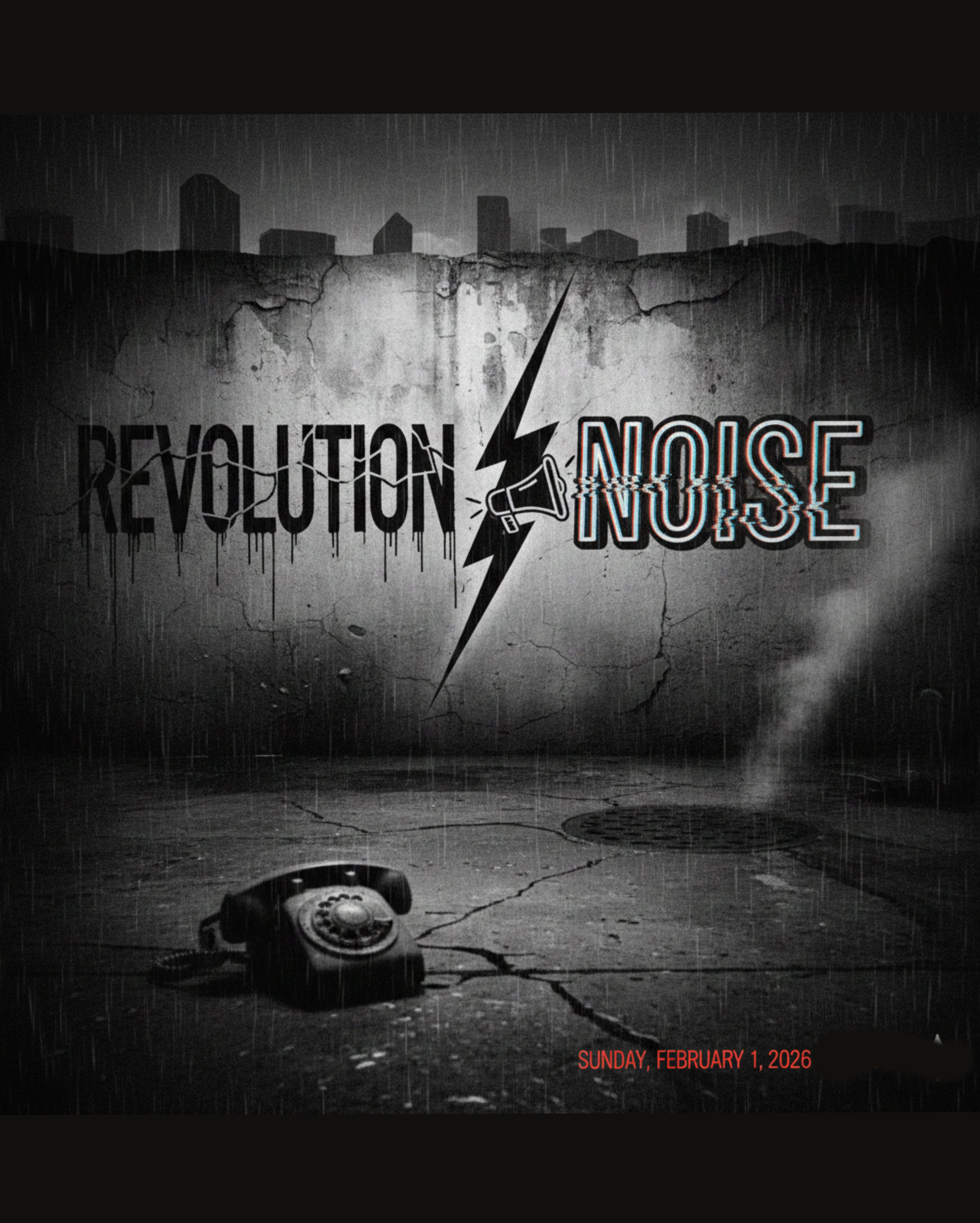
The Myth of the Romantic Revolution: Why Most Uprisings Fail and the System Knows It
We talk about “revolution” in this country like it’s a Marvel movie with better outfits and worse dialogue.
History laughs at that fantasy. The French Revolution didn’t end with liberté, égalité, and a TikTok dance; it ended with the Terror, a military strongman, and a Europe‑wide body count that would make a Pentagon planner blush. Encyclopedia Britannica notes that the Revolution devoured its own leaders and paved the way for Napoleon
The American Revolution is the exception people love to wave like a flag, but even that wasn’t a Twitter poll — it took years of economic pain, political coordination, and a very un‑Hollywood reality where barely a third of the population actually supported independence. The U.S. National Archives notes how divided colonial support really was
Revolutions don’t win because one side is morally pure. They win when enough people feel the same pain at the same time and agree that the pain is systemic, not a bad season of politics.
Until then, it’s cosplay with better slogans.
Further reading:
Foreign Affairs – “Why Most Revolutions Fail in the 21st Century”
For a visual gut punch:

Legitimacy vs. Chaos: The Military Doesn’t Care About Your Hashtag
Here’s the part nobody on cable news wants to say out loud: if half the country thinks your “revolution” is a partisan riot, you’re not starting history — you’re just justifying a crackdown.
Every government on Earth runs the same math. If unrest looks like one angry faction, they send in riot cops and start talking about “domestic extremism.” If it looks like the whole country, they start sweating about civil‑military relations and wondering if the generals are checking their email more than usual. Scholars of civil‑military relations have been screaming about this dynamic for decades
The military doesn’t ask, “Who’s right on Twitter?” It asks, “Is this the country speaking, or just another faction trying to swap jerseys with the same system?”
If the answer is factional, force looks “reasonable.” If the answer is collective, restraint suddenly becomes the patriotic option. That line is the difference between “revolution” and “riot footage” under a somber CNN voice‑over.
Further reading:
War on the Rocks – “When the Military Stays Neutral: Why Legitimacy Matters”
Watch this and then imagine it with the country actually unified for once:
Buy Me a Coffee: https://buymeacoffee.com/rxansmith
• PayPal: https://paypal.me/phireballsports
I’m doubling down here on rxansmith.substack.com, now hosted at rxansmithmedia.com via uncomfortable.rxansmithmedia.com
If all other platforms collapses tomorrow, I’ll be here calling out hypocrisy, violence, and greed… even if it burns bridges. I ain't going nowhere, heard?
The Figurehead Trap: How the System Swaps Villains and Stays the Same
Reducing the problem to one man, one party, or one election is the political equivalent of blaming the bartender for alcoholism.
Power loves a good figurehead sacrifice. Toss out a president, indict a prime minister, fire a tech CEO, hold a bipartisan hearing where everyone looks “shocked” — and then quietly change absolutely nothing. Analyses of failed uprisings over and over show elites offering symbolic concessions while preserving the core system.
We watched this movie after 2008: the global financial system nearly killed itself with a derivatives binge, millions lost homes, and the people who engineered it got bonuses, book deals, and quiet board seats. The IMF notes global inequality remains structurally baked in long after the crisis “ended”.
Removing one villain is not revolution. It’s customer service.
Real revolution is when the machine itself gets audited, not just the mascot.
Further reading:
New York Times – “When Populists Target the Wrong Elites”.
And a quick reminder from recent history:
The Outrage Economy: How Algorithms Turn Us Into Useful Idiots
The people running the platforms that run your brain know exactly what they’re doing. Outrage is their oil. Division is their refinery. Your attention is the gasoline they sell back to advertisers with a straight face.
Facebook’s own internal research, reported in 2021, admitted that algorithmic changes “rewarded outrage and divisive content,” because that’s what kept people scrolling and sharing. The New York Times detailed how engagement‑driven algorithms boosted anger and misinformation.
YouTube’s recommendation engine has been accused repeatedly of radicalizing viewers by nudging them from mainstream content toward more extreme, emotionally charged videos. The documentary “The YouTube Effect” argues that the platform’s design incentivizes extremity over nuance.
We’re not just divided; we’re being surgically sorted into digital tribes by machines that have one job: keep you too angry to think and too entertained to organize.
We fight over what’s on the screen, not who’s designing the script.
Further reading:
Nature – “Social Media, Algorithms, and Political Polarization” (2023).
If you want a hit of how outrage gets engineered:
Selective Morality: When Your Conscience Has a Trending Tab
This part stings, so take a breath: if your moral outrage lights up only when a headline or influencer tells you it’s time, that’s not morality — that’s outsourced thinking with good branding.
We bounce from cause to cause like political tourists: one week it’s Ukraine flags, the next week it’s Gaza maps, then it’s Supreme Court hysteria, then it’s boycotting whatever brand the algorithm says is today’s Great Satan. Pew Research finds most Americans describe their own political engagement as “occasional” and “issue‑specific,” not consistent.
Meanwhile, the structural stuff that affects almost everyone — wages, healthcare, housing, corporate consolidation — gets treated like background noise. OECD data shows income and wealth gaps widening in most advanced democracies over the past decades.
A movement that only cares about approved injustices is not a movement. It’s a pressure valve the system uses so you can “speak out” without actually threatening anything important.
Morality isn’t a subscription service. If it turns off when the camera does, it’s theater.
Further reading:
The Guardian – “Performative Activism and the Limits of Online Outrage”
And for a brutal look at our outrage diet:
Most People Aren’t the Enemy: The Quiet Majority Outside the Room
Here’s the dirty little secret: most people are not extremists. They’re just exhausted, underpaid, overstimulated, and trying to survive a system that treats them as both labor and audience.
Surveys consistently show that only a small sliver of Americans — roughly 8–10% on each side — are truly ideologically extreme, while independents and moderates make up the bulk of the population. Studies like “Hidden Tribes” estimate that the “exhausted majority” outnumbers ideological activists several times over.
Yet you’d never know that from social media or cable news, where the most extreme voices are treated like they represent half the country each. Brookings research notes that Americans are less polarized on policy than on perception of each other.
The average American is not in the top one percent, not in the back room, not at the donor retreat. But they’ve been talked into believing the family across town is the real threat, instead of the people quietly writing laws and contracts that keep everyone else scrambling.
If you can’t tell the difference between your neighbor and your captor, the propaganda is working.
Further reading:
The Atlantic – “The Exhausted Majority and the Myth of Two Americas”.
And for a snapshot of the people who never get a microphone:

Roots Before Trunk: Agree on Reality or Forget Revolution
Before you can topple anything, you have to agree it exists.
If we can’t even agree on basic reality — what’s broken, who’s benefitting, what the scoreboard is — then all we’re doing is yelling different fantasies at the same collapsing building. Polling regularly shows Americans broadly agree on core problems like corruption and inequality, even if they disagree on solutions.
So the order of operations has to be brutal and simple:
Truth before ideology – If your side can’t admit inconvenient facts, it’s not a movement, it’s a cult.
Country before party – If your loyalty to a logo is stronger than your loyalty to your neighbor, you’re exactly the customer the system ordered.
Roots before trunk – You don’t fix a dying tree by arguing over leaf color.
Unity doesn’t mean singing “Kumbaya” with people you can’t stand. It means agreeing that the fight over abortion week‑15 versus week‑18, or handgun magazine size versus rifle stock shape, is a rounding error compared to who owns the country, who writes the rules, and who gets bailed out when the music stops.
Once we agree on the roots, the branches get a hell of a lot easier.
Further reading:
CSIS – “What Holds Americans Together?”.
And a quick hit on why civil‑military balance depends on shared reality:
The Bottom Line: Revolution Is Necessary, But It Won’t Look Like the Movie
Real change doesn’t start with picking a villain; it starts with the terrifying admission that both teams you’ve been cheering for are playing in someone else’s stadium.
Systems don’t collapse just because you expose them. They collapse when the people inside them finally stop pretending they don’t see what’s going on, and they stop letting their favorite manufactured arguments distract them from the robbery in progress. Research on modern revolutions shows that structural change requires both exposure and coordinated withdrawal of consent.
Alignment isn’t sexy. It doesn’t trend. It doesn’t come with a hashtag or a yard sign. It requires admitting that some of your favorite hot takes were hand‑delivered by people who profit from your rage and your impotence.
Nothing fundamental changes until people who disagree on almost everything agree on one thing: what’s broken, who’s benefitting, and what reality actually is.
Until that happens, we’ll keep mistaking noise for momentum, symbolism for progress, and emotional release for victory — which is exactly how the people running this circus like it.
That’s not cynicism. That’s sobriety. And in a country this drunk on outrage, sobriety is the most revolutionary act you’ve got.
Further reading:
The New Yorker – “The Year We Realized the System Wasn’t Broken, It Was Working”.
And if you want a closing kick in the teeth before you go back to doomscrolling:
If you missed Part 1 of 2 in my rally cry for revolution, the link is 👇
The Last Trick in the American Experimental Deck (Part 1 of 2)
Oh, America — you bloated carnival of endless breadsticks and bottomless salads, where the Olive Garden stands as the high altar of our corporate-induced coma. Unlimited carbs to numb the soul while the suits upstairs carve up the real feast behind a door you didn’t even know was there. We’re huddled in these chain-restaurant booths, watching the farewe…
•
• YouTube: https://youtube.com/@RealRxanSmith • X (formerly Twitter): https://x.com/rxannsmith • Instagram: https://instagram.com/rxansmith • Facebook: https://facebook.com/Ryan.X.Smith • Buy Me a Coffee: https://buymeacoffee.com/rxansmith • PayPal: https://paypal.me/phireballsports
100,313 Likes∙
2,082 Restacks
1 Dream


