
We’ve done the work. Now we close the ledger — and deliver the verdict Washington doesn’t want to hear.
The Ally Test — Full Series
PP1 The Definition | P2 The Blowback | P. 3 The Incentives | P 4 (You're Here)
We’ve done the work.
Part I: We defined what a real ally looks like. Mutual risk. Mutual respect. Behavior that reduces danger — not manufactures it.
Part II: We walked through the blowback. Every joint strike is a recruiting poster for the next twenty years of terrorism. We’ve seen this movie. We know how it ends.
Part III: We followed the money. AIPAC. The campaign checks. The most profitable job in Washington isn’t serving constituents — it’s serving the relationship.
Now we close the ledger.
Part IV is the accounting. And today, the accounting comes with a verdict.
The Ledger
Every decision has a price tag. Every policy has a bill. When you defer the cost long enough, the accumulation stops being a line item and starts being an existential threat.
Since 1948, U.S. foreign aid to Israel totals over $300 billion — inflation-adjusted. [KFF]
Annual military assistance under the current MOU: $3.8 billion per year.
Emergency supplemental aid after October 7, 2023: $14.5 billion.
Jordan + Egypt combined annual aid: $1.3 billion — for two countries actively stabilizing the region.
Read that again. Two countries doing the visible work of regional peace get a fraction of what one country gets for defying presidential directives and dragging us into a shooting war.
The math is visible. The political framing is not. For perspective on the long-term strategic costs, see Harper’s Magazine on NeoCon Influence and Haass on Questionable Wars of Choice.
And the moral ledger runs alongside it.
Blank-check support comes with indirect moral costs that compound over time: the perception of double standards, civilian casualties we didn’t choose but funded, and a domestic cynicism toward foreign policy institutions that is now nearly irreversible.
A generation is watching. They’re doing the math. And they are not impressed.
Gallup (2024): 61% of Americans aged 18–29 sympathize more with Palestinians than with the Israeli government. Campus protests in 2024 were the largest since Vietnam — nearly 3,000 arrests. See Seven Things to Remember as the Iran War Fog Descends for context.
That’s not fringe. That’s a signal. When you ignore signals long enough, they become consequences.
The Pattern
Here’s where the accounting gets uncomfortable.
Because the financial ledger — the billions, the MOUs, the blank checks — is only one column.
The other column is the war itself. The one we’re in right now. And what it is going to cost us.
There’s a professor who goes by the name Professor Jiang on the YouTube channel Predictive History. In late 2024, he made three forecasts using game theory.
One: Donald Trump would win the presidential election.
Two: The United States would go to war with Iran.
Three: The United States would lose that war.
Two of those predictions have already happened. The third is unfolding in real time.
Professor Jiang — Predictive History | Game Theory Analysis: U.S. vs. Iran
Now — I want to be clear. Professor Jiang did not invent this conclusion. America’s own generals, scholars, and strategists have been saying versions of this for decades. They just couldn’t get anyone in Washington to listen.
“The United States has already lost its war for the Middle East.”— Retired U.S. Army officer, The Nation
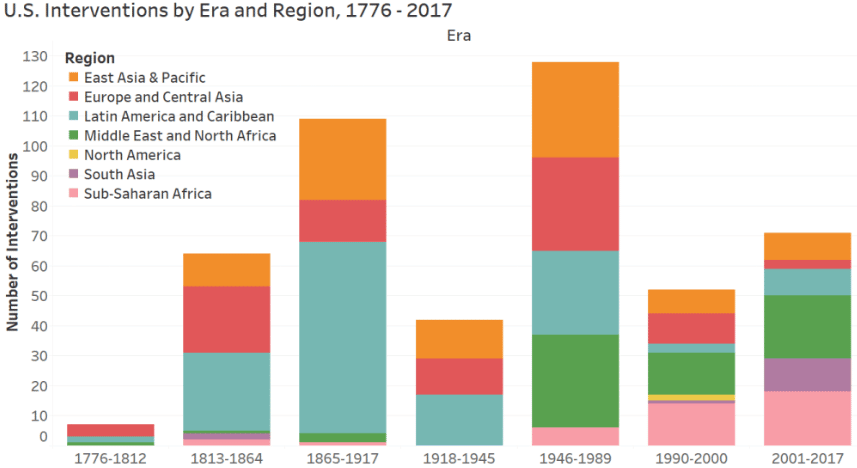
This is not a new warning. It’s a pattern. And the pattern has been playing out since 1991.
Iraq. Afghanistan. Libya. Syria. Four interventions. Four variations of the same outcome: tactical brilliance, strategic blindness, long-term disaster. For detailed breakdowns of war costs and trajectories, see Mick Ryan on War Trajectories.
The United States rarely loses battles in the Middle East. But it repeatedly loses the wars.
The Brown University Costs of War Project has done the math on post-9/11 conflicts: more than $8 trillion spent. Over 900,000 people killed. 430,000 of them civilians. 38 million people displaced.
And Afghanistan — after twenty years of American blood and treasure — is once again ruled by the Taliban.
The pattern is not a coincidence. It is a warning that has been ignored every single time.
The Math
Iran is not Iraq.
Saddam Hussein’s military was hollowed out by years of sanctions. His army collapsed in days.
Iran spent two decades studying exactly how that happened — and building a response.
Through Hezbollah in Lebanon. The Houthis in Yemen. Militias in Iraq. Hamas in Gaza. Every single one of those conflicts was a laboratory. Every American missile fired was data. For further analysis on possible U.S.–Iran conflict scenarios, see Haass on War of Choice.
Iran does not need to win a conventional war. It needs to fight a different kind of war entirely. And the math of that war is stacked against us.
Weapon / AssetWho Uses ItCost Per UnitShahed-136 attack droneIran$20,000 – $50,000Patriot interceptor missileU.S.$3M – $4MTomahawk cruise missileU.S.$2.5M
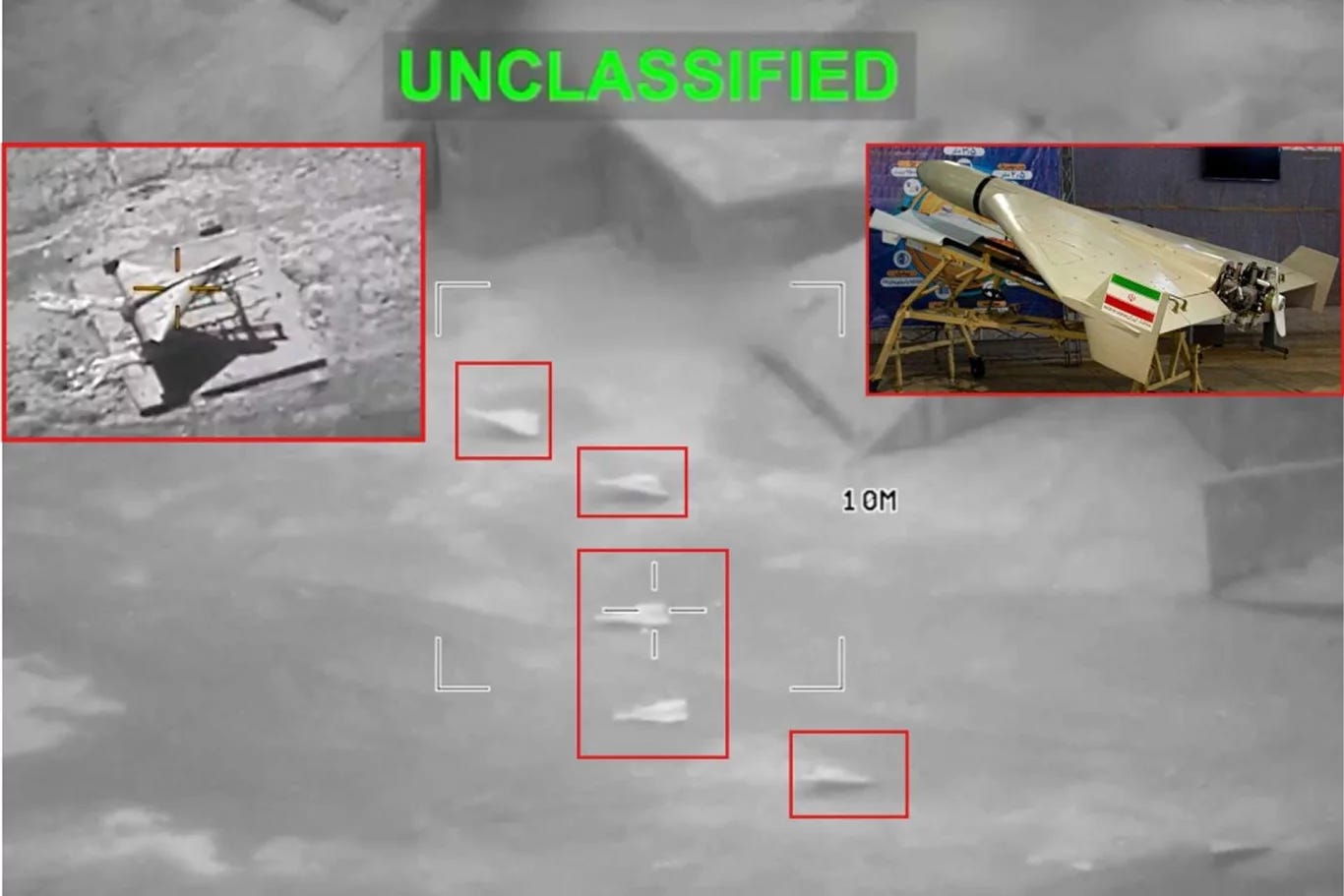
They fire a $40,000 drone. We fire a $4 million missile to stop it.
That is not a war. That is a strategy designed to drain us dry. See Newman on Asymmetric Costs for full context.
“Ground-based interceptor missiles are not infinite.”— Carnegie Endowment for International Peace
And the target list goes beyond military assets. The Gulf states are not just military partners — they are pillars of the global financial architecture. Their decision to price oil in U.S. dollars underpins the entire petrodollar system.
Iran’s drone doctrine targets the infrastructure that keeps that system functioning: ports, airports, data centers, and desalination plants.
Roughly 60% of Gulf water supply comes from desalination. A sustained drone campaign against those facilities doesn’t just inconvenience Dubai and Riyadh. It threatens the basic functioning of civilization in the region — and sends shockwaves through every economy tied to the petrodollar. For additional global risk analysis, see Ryan on Global Risk.
Which is every economy on the planet.
And if history tells us the air campaign isn’t enough — and it always tells us that — then comes the ground war.
Iran’s population: 87 million
Terrain: mountainous, built for asymmetric defense
Military doctrine: two decades in the making, specifically designed to make American occupation untenable
Afghanistan (population 38 million): 20 years. Two trillion dollars. Ended in humiliation.
“Counterinsurgency works if the intervening country demonstrates the will to remain forever.”— Lt. Gen. Daniel Bolger (Ret.), Why We Lost
Do the math.
The Verdict
America is screwed.
Not because we’re weak. Because we walked into a trap that was engineered in advance.
Not because our military isn’t the most capable fighting force in the history of organized warfare.
We are screwed because we walked into a trap that was engineered in advance — and we did it with our eyes open, because the people who profit from the relationship made sure no one was allowed to say it out loud.
Every $4 million interceptor fired at a $40,000 drone is a strategic victory for Iran. Every week of prolonged engagement drains stockpiles that take years to rebuild. Every escalation hands Tehran the narrative it has been cultivating for decades: that America is an empire in decline, picking fights it can no longer finish.
The 2003 invasion of Iraq didn’t just destabilize a country. It produced the exact outcome Washington feared most: a strengthened Iranian sphere of influence stretching from Tehran all the way to Beirut. We paid for that outcome with blood and treasure. And then we did it again. And again. See The Connector on Strategic Lessons.
History does not repeat itself exactly. But it rhymes. And this rhyme is unmistakable.
Recalibration — Not Abandonment
Here’s what this series has never been: anti-Israel.
Here’s what it has always been: pro-America. Actually, operationally, no-exceptions pro-America.
And real “America First” — not the bumper sticker, the actual doctrine — requires structured accountability. This series advocates transparent alliance management:
Conditional aid tied to measurable, verifiable outcomes
Automatic review triggers when civilian-casualty thresholds are crossed or presidential directives are defied
Sunset clauses on MOUs requiring periodic congressional reauthorization
Explicit consequences for allies who treat the Oval Office like a rubber stamp
This is not punishment. This is the basic definition of adult alliance management. For comparative examples, see Haass on Policy Accountability.
Look at how we treat the UK. South Korea. Poland. The Five Eyes partners. Every one of those relationships operates on shared risk, respect for American directives, proportional cost-sharing, and behavior that reduces danger rather than manufactures it.
That is what an ally looks like. That is the standard.
One relationship in the entire world gets exempted from that standard. And right now, in real time, we are paying the price for that exemption in ways that are only going to compound.
The Real Question
The real question isn’t Israel. It’s American strategic discipline. Nations rise and fall not only on military power, but on honest risk evaluation and adaptive policy. The ledger exists whether we check it or not.
America is not weak.
America is distracted. America is buying narratives instead of accountability. America keeps writing the same check, making the same assumptions, ignoring the same warnings, and then acting surprised when the bill arrives.
The bill is here.
We have a definition of what an alliance should be. We have a record of what happens when that definition is abandoned. We have a generation that sees all of it clearly and is asking hard questions that their parents were too polite — or too bought-off — to ask.
If we answer honestly — with conditionality applied, incentives realigned, and strategic clarity restored — we preserve credibility, avoid the next engineered war, and demonstrate that American national interest is not negotiable for anyone. Not for any flag. Not for any lobby. Not for any flattery.
This is not speculation. It is evidence. It is pattern. It is math.
The quiet accounting has been waiting decades for someone to pay attention.
We paid attention.
Now it’s up to you.
I’m Rxan Smith. This is The Quiet Things. If this series made you uncomfortable — on either side — then we did our job.
Subscribe. Share. Stay engaged. And stay American First — the real kind.
Subscribe on Substack Watch on YouTube

The Rxan Smith Universe
Rxan Smith on Substack – Deep dives, essays, and newsletter content.
YouTube Channel – Videos, podcasts, and commentary.
X (formerly Twitter) – Real-time takes and engagement.
Instagram – RxanSmith – Daily posts and reels.
Instagram – SmithRxan – Alternate feed and updates.
Facebook Page – Community discussions and posts.
Buy Me a Coffee – Support the content directly.
PayPal – Another way to support the work financially
.
Sources & References
Pew Research Center — Generational Attitudes on Israel/Palestine
Carnegie Endowment for International Peace — Missile Defense Analysis
Congressional Budget Office — Defense Appropriations & Aid Reports
Lt. Gen. Daniel Bolger (Ret.) — Why We Lost
Atlantic Council | Harper’s Magazine | CSIS | Harvard Kennedy School
Predictive History (YouTube) — Professor Jiang, Strategic Framework Analysis