

I Believed in Hard Work. Then America Showed Me the Fine Print.
9/11, College, Capitalism, and the Slow Death of the Republican Promise

Close your eyes. Imagine it’s the fall of your freshman year at college, and you’ve just stepped onto the campus for the first time. The world feels wide open. Four years of hard work, honors classes, and discipline have led you to be just a few years away from a job, a starter home, a future you can build with your own hands.
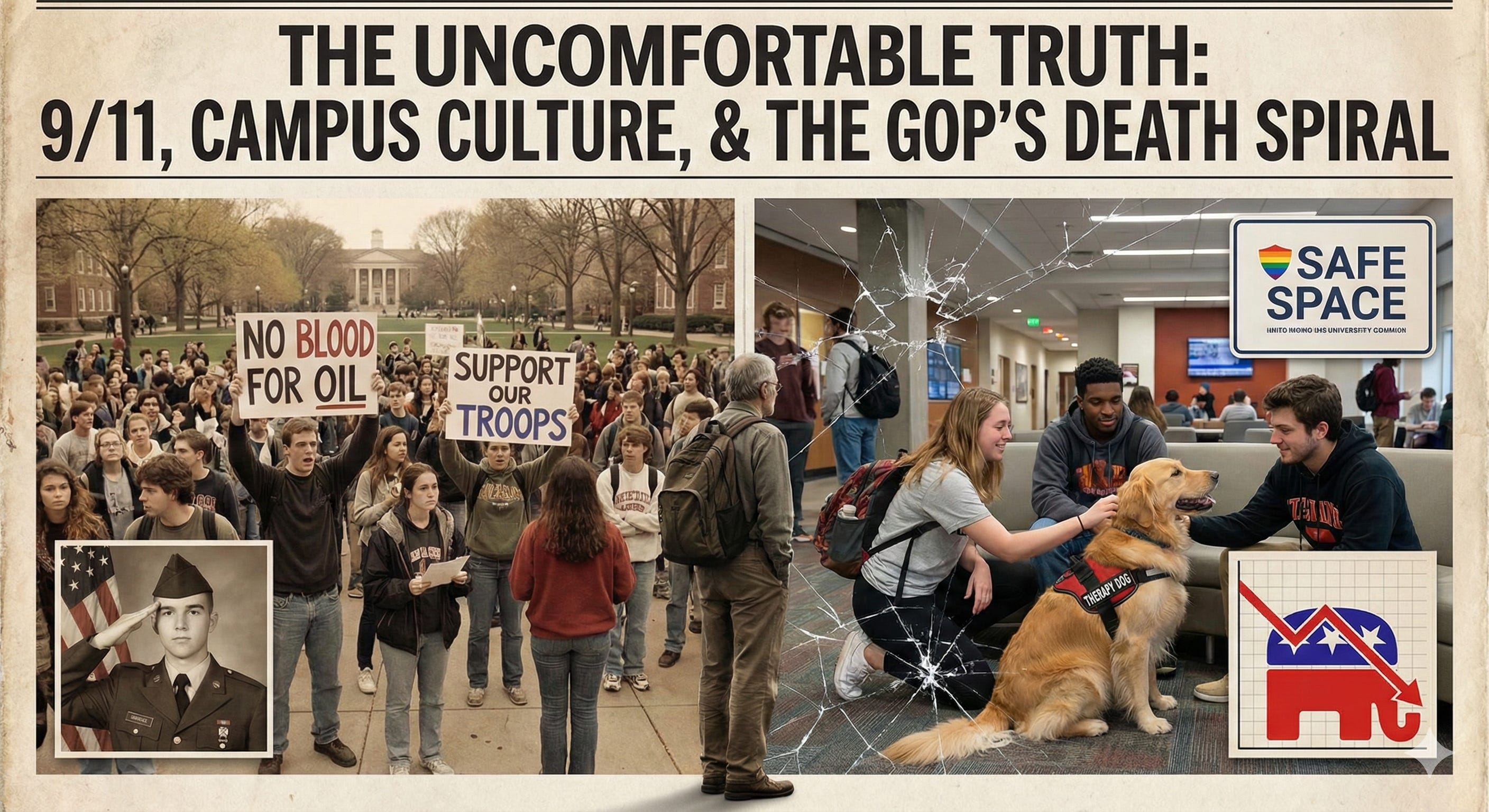
That Magic Moment
Imagine life as a conveyor belt: reliable, predictable, rewarding. Even if you slacked a bit, the system had room for you. That’s the backdrop for my story.
Before that morning, college was a transaction in my mind: get the paper, get the money, build a life. I believed America more or less worked like the brochures promised—if you worked hard and did more than what was expected, doors would open and stay open. I wasn’t trying to impress anyone; I was just used to outworking everybody, used to teachers and my parents assuming big things were coming, and I carried a quiet confidence that effort alone would keep creating my opportunities.
I had finished early the first week of classes, had my syllabi from each course in my newly organized notebook, and was ready to attend the first real lecture. Any college student can remember this moment, but my journey was especially unique.
YouTube Version | Podcast: Rxan Smith Uncomfortable
I was heading to my 9:00 a.m. linguistics class at the University of Delaware. Crisp fall air, laughter on the brick paths, pecan smoke drifting from the corner café. My River MP3 player held 100MB and had an FM radio. I had envisioned being a college student for years—walking to class, listening to the radio and the morning news, because to me this represented adulthood.
I decided to listen to morning talk radio because that’s what my dad did. Growing up within range of New York radio airwaves, he’d listen to 660AM WFAN. I had to settle for 97.3 WMMR out of Philly (I think) and found Howard Stern—juvenile, normal, adulting. Or close enough for an eighteen-year-old Jersey boy in a world before Facebook.
Then his voice cracked and I heard: “There’s been an explosion.”
I was confused and trying to hear what he said, and all of a sudden I heard this symphony like I’d never heard before—a mixture of Nokia ringtones blaring outdoors, like somebody had an ice cream truck broadcasting a bag of ringing cell phones.
The buzz in the air disappeared, and I stopped listening to the radio to see what was happening. No screams—just a silent rush toward the Trabant Student Center

.I followed, along with a thousand others, packed into that bright hallway with TVs broadcasting.
BREAKING NEWS: A commercial airliner has crashed into the World Trade Center. One of the Twin Towers is on fire.
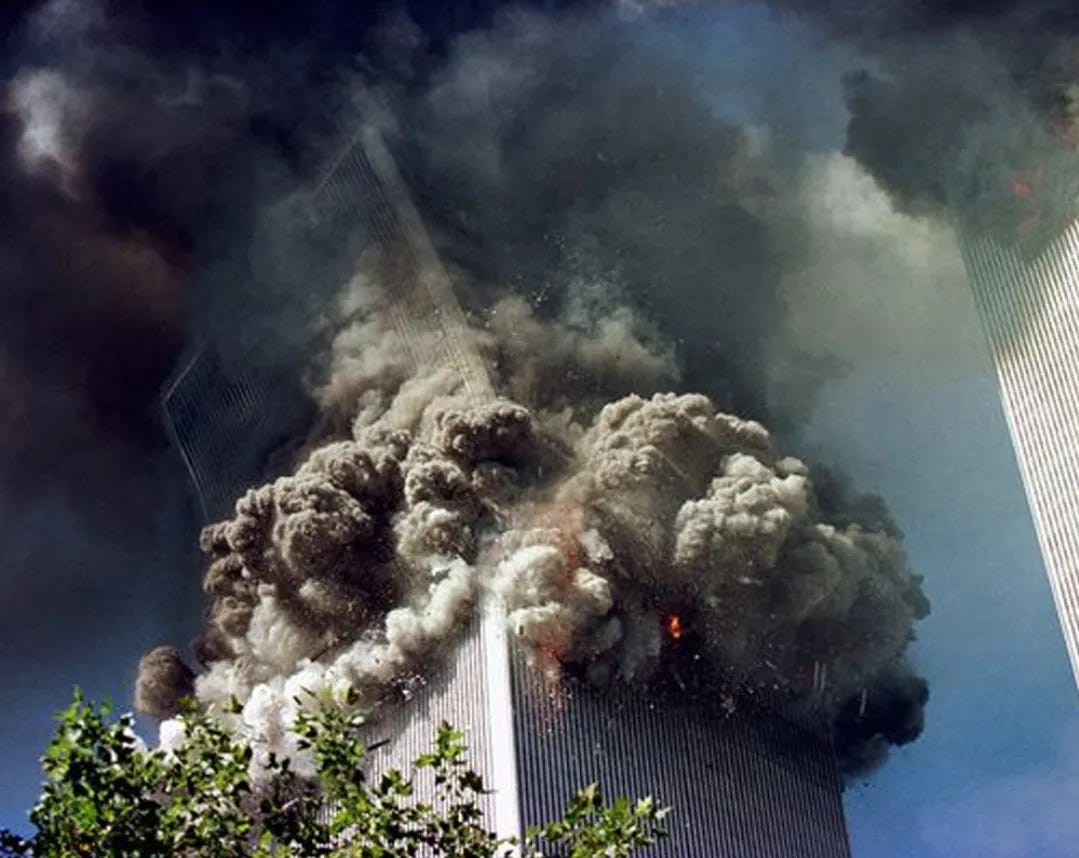
Immediately I knew that the kid from my dorm whose parents worked in the financial district was in trouble. He was in tears, jaw dropped, dialing parents who weren’t answering. New York, Jersey, Connecticut students panicked.

I had to get to class, which was across the street and one building over, so I did. The teacher was hooking up a TV on an AV cart and told everyone to sit down and be silent.
I asked the girl next to me, Kristen, what was happening. She was just as confused as I was because she hadn’t even seen the first plane. Half of the class was unaware, and half of the kids were making jokes about drunk pilots.
Then the TV came on. I remember it like yesterday. A kid said, “Why are both towers on fire?”
We had missed it—that famous moment when the second plane hit. We must have turned it on within the first minute after, and when she turned the volume up you could hear the absolute speechlessness, which somehow—very much like the silence in that student center—was more deafening than the loudest noise you could imagine.
That morning, fear chose sides. And that fear began shaping my conservative faith.
In the weeks after, every headline felt like a drumbeat: who did this, what signs we missed, anthrax in the mail, terror alerts, new attacks in Spain and London. When Bush stood on that pile of rubble with a bullhorn and promised we’d find who did this and make them pay, it lit up something righteous in me—we had been objectively victimized, and it felt like our war, our moment to show the world what American strength looked like. I was terrified that if we didn’t hit back hard enough, the message to the world would be the same as in any schoolyard fight: this is what happens if you hit them, and nothing really happens to you.
Days later, four dorm mates withdrew: two lost fathers, one a mother, one a brother. Lives detonated. We still showed up to class—like reality hadn’t shattered.
:Our Trauma Was Different Than Other Generations

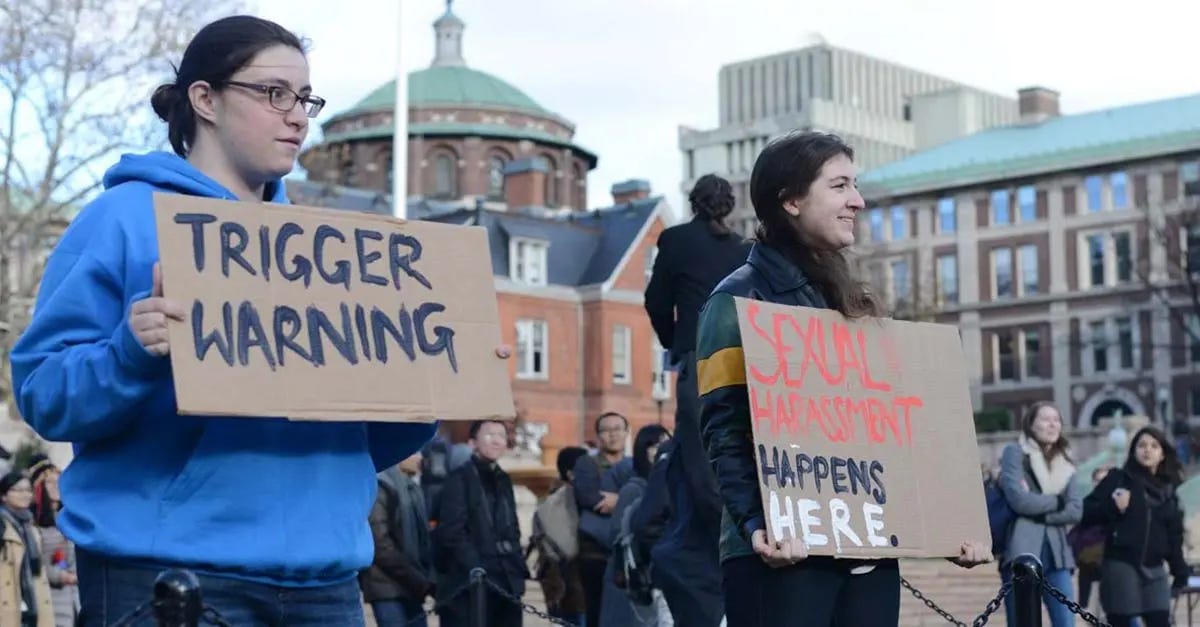
Now, flash to today’s campuses: Therapy dogs and emotional support animals are commonplace. Universities bring in pups during finals because “stress” means hearing a challenging idea, and “trauma” can be a differing opinion. Safe spaces and trigger warnings shield students from discomfort, turning higher education into a bubble where fragility is accommodated, not overcome.
Back in the late ’80s and ’90s, college was different. Students worried about midterms, tuition, or whether they’d land a decent job after graduation. Dorm drama, late-night study sessions, frat hazing, or campus protests over political issues were the version of “trauma” then—but it was manageable, navigable, survivable. People disagreed loudly, argued passionately, and still respected each other’s views because we were Americans first, citizens of a system that assumed debate didn’t need hand-holding.
My experience was different. The morning of 9/11 shattered that sense of normalcy, turned fear into ideology, and forced choices that weren’t just about classes or grades—they were about identity, loyalty, and survival. It’s probably the last time a generation could openly pick their politics while still respecting the other side’s perspective, before fear and ideology became a tribal cage.
For me, the path to liberalism was one that was earned through acceptance, open-mindedness, nuance, context, life experience, and understanding. The fact that so many in my generation had the courage to switch teams, because we valued independent thought over shaming or tribalism, gives many of us a unique perspective.
I can say this because I know. Others who say this, speak out of ignorance, or because they were told that this was the case and they believed it. They require very little evidence.
However, my personal conservative journey mirrors the death spiral of the GOP.
I grew up. The Republican party didn’t. But they're not an enemy. They're not made up of a majority of misogynist racist homophobic beings. If you learned to converse with people from different walks of life, you wouldn't feel the outrage that you. I know. Lots ts of us in that 2001 freshman class know.
On campus, the split started to show. You’d hear protests about oil, empire, and Bush finishing his father’s Gulf War business while other students walked past chanting “Bomb Saddam.” When people far from the fight started criticizing the war, I leaned harder into my side, especially after talking to my brother who was actually over there, trying to fight terrorists hiding among civilians. It felt like a line had been drawn between people who understood the stakes and people who, in my mind back then, were talking out of turn about a war they didn’t have to bleed for.
How 9/11 Forged Conservatism on College Campuses
“We let fear pick our ideology.”
That day shaped me—not my parents. JROTC drilled structure into me. Full scholarship, military path: ROTC, National Guard, GI Bill—and the overwhelming sense that I was literally the exception, a college student living a version of what others faced in Vietnam without the campus privileges. I even gave up my full-ride opportunities to try to game the system, shaving off active duty years however I could. I won’t bore anyone with the traditional ROTC story of scholarship, Guardsman life, and GI Bill—but I made those choices for all the wrong reasons, and somehow, it made me look like a genius. Twice.
Then came boot camp. Asthma attack. 1.5-mile run. Lungs quit. Plan evaporated. I lied on what they call a MEPS exam about my medical history saying that I had no asthma because I was usually able to hide it. Military financing is out. No fallback—just rebuild. No wonder I gravitated to early-2000s conservatism: duty, strength, patriotism, responsibility, rules with purpose—before it morphed into a cult with hats. Imagine that. I felt a sense of guilt that I got a second chance.
I knew that no money in the world would be worth that military commitment under the for tours that I watched my brother 2 years older go through. At the same time, I was furious and I wanted Revenge. We all did. For any youngsters reading, go check out the vote in the Senate to go to war and see who actually voted against it. Both WHO voted against war, and WHO/HOW MANY voted for war paint a vividend long detailed picture with that brush. I'll get into that later.
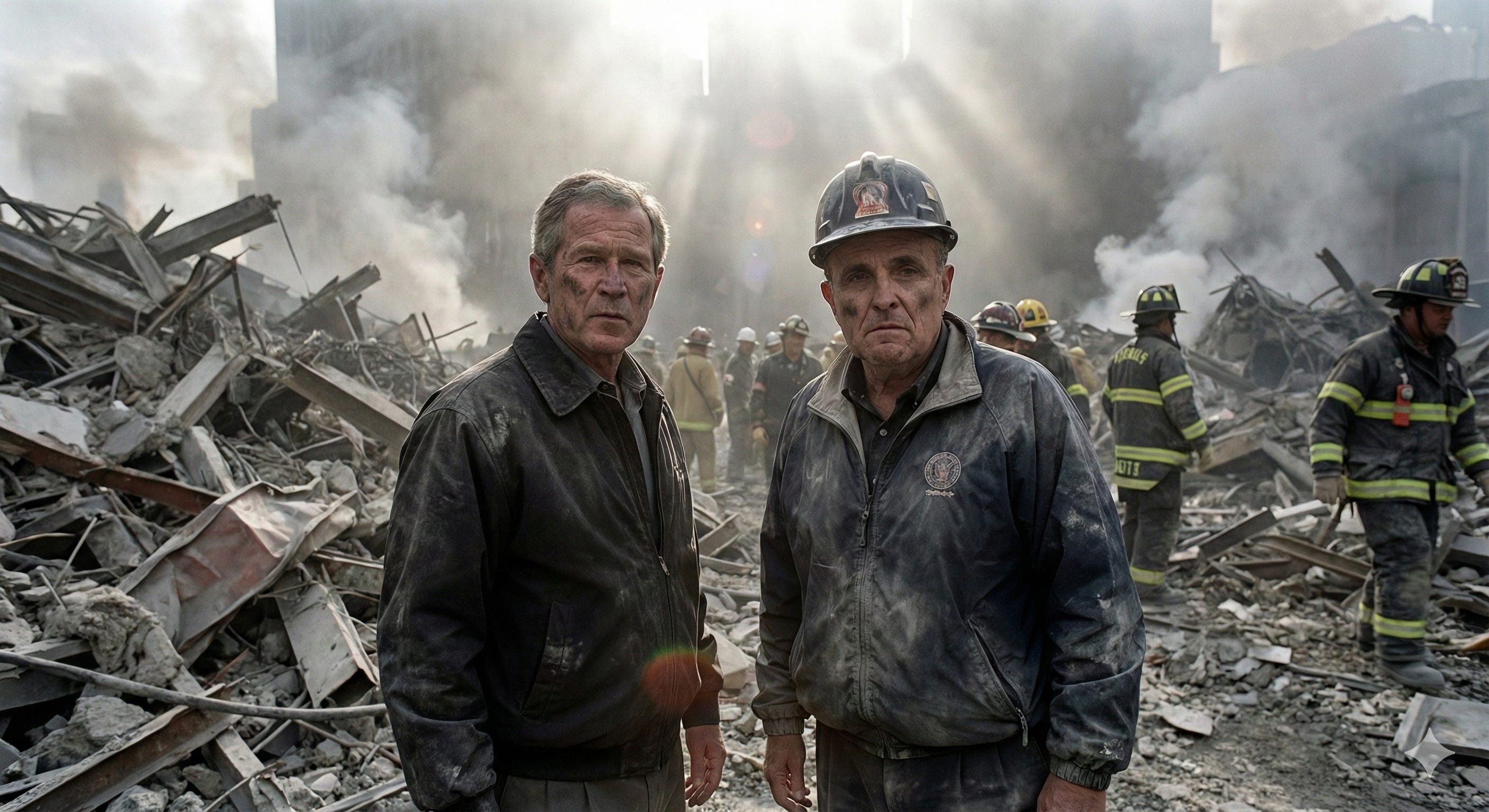
But the uncomfortable truth: 9/11 rage did our thinking. Fear chose sides. Bush wars ended up bankrupting us—financially, spiritually. Hollowed the middle class. “Righteous” disasters.
Then Trump: Mid-tier con artist hijacking grievance. Sold loyalty like merch. Zero accountability.
“Principles torched for one man’s ego tantrums.”
If we don’t burn this cult down, GOP implodes by 2028—ghost town by 2036. You can't throw away all of your values as a party and just pick up where you left off after every Senator and Congressman has been shaped with the MAGA movement but doesn't really have a clear Vision or path.
I digress. I do that.
Real-World Education: Risk, Success, and Fragile
If I want to break it down quickly, which I'm going to do, to get this out in time I'll tell you this. The first five or six years of adulthood showed me why all of the things that conservatives preach were true and the next five showed me why they weren't…. very slowly, but surely.
College was a lab: a legally gray party-bus empire. There was one moment I knew I’d cracked some kind of code. I overheard my mom talking to a friend who’d noticed my new car, and she said, almost laughing, that she’d basically stopped doubting me because everything I touched turned to gold. My friends were broke college kids scraping together twenty bucks for a night out while I was the one buying rounds, not with my parents’ credit card but with money I’d hustled myself. I loved pulling people along for the ride, but underneath it all there was this constant low-level anxiety that if anyone asked the wrong questions, the gray area I operated in could go dark very fast.
By the time I graduated college, because of the very justified actions I took in college I had saved the a million dollars in cash and bought the house I grew up in from my mom. I still wanted to show everyone that I went to school for a reason and I did get a great education building that empire, regardless of the boundaries of law. I reinvested boldly—scaled stakes, flipped houses, managed charter school finances. By 25: properties, networks, hundreds of thousands saved and three houses. So far the Republican Playbook of having anyone can make it if they just work hard rang true for me.
Meritocracy worked—but only for navigators of rules, connections, and luck. Take Chester, PA: the shiny charter school buildings, uniforms, slight score bumps. Inside the district where I was the youngest business administrator in state history? Generational poverty, broken homes. No level field—preparation and luck, not just grind.
I ran finances for a nonprofit managed by a for-profit company. Essentially, it was me and a CFO coordinating with a grant writer who could pull in enormous sums of money. We creatively kept the books to show no profit. This playbook exists across countless industries. The lead guy? Ivy League law degree, never practiced a day in his life. He went to school to exploit the gray areas legally—he should’ve had a JD in tax evasion.
That experience shoved a real-world, gritty truth down my throat: most people do not have the same opportunities I did. It made me rethink everything—merit, luck, and the system we’re all sold as fair. The crash and my time in that charter system forced an ugly realization: hard work wasn’t the magic key I had always believed it was. I watched kids sold a glossy story about education and opportunity, only to hit the same brick walls because there was no real exit ramp out of their neighborhoods, no way to compete with the kids who were born plugged into the right networks. As I looked at my own path—illegal cash, real estate I thought was “safe,” and then watching values tank because the game was rigged from the top—I couldn’t pretend anymore that meritocracy was simply about grind; it was about preparation, protection, and a system that quietly decided whose effort would count.
Confrontation: 2008 and Obama
Crash wiped investments. The crash and my time in that charter system forced an ugly realization: hard work wasn’t the magic key I had always believed it was. I watched kids sold a glossy story about education and opportunity, only to hit the same brick walls because there was no real exit ramp out of their neighborhoods, no way to compete with the kids who were born plugged into the right networks. As I looked at my own path—illegal cash, real estate I thought was “safe,” and then watching values tank because the game was rigged from the top—I couldn’t pretend anymore that meritocracy was simply about grind; it was about preparation, protection, and a system that quietly decided whose effort would count.
“Hard work guarantees success” rang hollow. Obama explained systems, stakes—like no one else. Conservative economics? Merit for the few: prepared, connected, lucky. I certainly saw firsthand that trickle-down-economics was shameless bullshit, and that bothered me. You see, the entire conservative movement would work if they felt some obligation to this very unique country that allowed them to achieve the success they achieve, and felt a duty to give back. No one likes paying taxes that they are mandated to pay but you do at least need to realize come when you get to the top, that you wouldn't have got there without the country that allowed you to the opportunity to do it which is why you guys are so stars and stripy and humping Flags left and right. Hey tough guys… . Back it up! Big Talk No follow through.
And that goes for both parties but much more for the right. They govern without shame. At least on the left they shame without governing and have every intention of trying.
The real “oh shit” moment came when I finally faced a problem I couldn’t outwork or charm my way out of. For the first time, I saw that without connections and a cushion, I’d be relying on a safety net I’d spent years being told was just a hammock for scammers. Looking closely, I realized that supposed wave of people “living off the system” was mostly political fiction; the benefits weren’t generous enough to coast on, let alone thrive, and the bigger lie was pretending that anyone could just choose not to need help. Around then, my dad—who’d mostly kept his politics to himself—started quietly pointing out why safety nets mattered and why empathy wasn’t weakness, and suddenly the rhetoric I’d absorbed didn’t survive contact with what I was seeing.
Three Hard Lessons
Meritocracy works—but only for system-navigators.
Deregulation and loopholes breed opportunity—and fragility.
Ideals fail without implementation.
Political Audits: Why I’m a Classic Liberal Now
I’ve audited both parties:
Democratic Party Audit: The Misplaced Outrage That Keeps Electing Trump
Republican Party Audit: Dropping Monday – Subscribe to get it first
Registered Democrat: Less corrupt option. Intention exists—but Citizens United, gerrymandering, corporate capture block change. Solution: common-sense revolution. Life, liberty, happiness—for all. Opportunity guaranteed, not stacked.
Epilogue: Reckoning
Listen up ladies and gents—here’s the real talk nobody wants on a Friday night. I get it: I chased tax breaks, loopholes, every edge a disciplined hustler could grab. Lived it. Earned it. Thrived.
But thriving on a rigged board doesn’t make you a genius—it makes you lucky. And luck comes with a bill: responsibility.
When I picture that freshman version of me walking across campus with his MP3 player, I want to grab him by the shoulders and tell him: whenever fear is loud, slow down and ask what the other side of the story is. Don’t let cable news or party lines rent space in your head for free—watch the left and the right, then decide issue by issue, not team by team. For all the disillusionment, there’s still a part of America’s promise worth believing in: when the stakes are life or death, people remember they’re Americans before they’re red or blue, even if it tragically takes disaster to wake that up. If there’s one uncomfortable truth to carry into the voting booth, it’s this: your single vote is not a magic wand, but it is the first brick in a path that takes multiple elections, local and national, to lay—and if you only see two options on the table, it’s because someone decided to hide the rest.
Republicans preach self-reliance... but it only works for the few with a head start. Democrats push safety nets... but they miss half the people drowning.
Both sides are broken theaters—spectacle over results. Principles matter, but only if implemented without corruption.
We need the uncomfortable blend: merit that flourishes, vulnerability protected. Systems rewarding grind and lifting the stuck.
That’s the America I saw possible that fall morning—before the smoke. Before the wars. Before the cult. It’s still worth fighting for. But only if we grow up.

If This Resonated, Read These Next
If my 9/11 morning shattered my conservative illusions: Did 9/11’s terrorists really win by turning America against itself?
The left’s outrage addiction handed Trump the keys – again: The Misplaced Outrage On The Left Is What Elected Trump. Again. (With Receipts)
My economic crashes echo the nation’s hidden disease: THE DEBT IS THE DISEASE COVERED UP BY THIS GOVERNMENT SHUTDOWN CHARADE
Join the Uncomfortable Conversation
If this hit you in the gut—good. That’s the brand. Subscribe Free Now – Get the GOP Audit Monday
Watch me break this down on video: YouTube @RealRxanSmith
Drop your story below: When did your faith in the system crack?
Connect With Rxan Smith
Substack: rxansmith.substack.com
YouTube: @RealRxanSmith
X (formerly Twitter): x.com/rxannsmith
Instagram: instagram.com/rxansmith
Facebook: facebook.com/Ryan.X.Smith
Buy Me a Coffee: buymeacoffee.com/rxansmith
PayPal: paypal.me/phireballsports
Y
I appreciate how honest this piece is. The 9/11 moment, the early belief in hard work, the later realization about luck, connections, and gray areas; a lot of that will resonate with people who lived through the same era. Lived experience like this matters, and it shouldn’t be dismissed.
Where I start to disagree isn’t with the idea that effort alone isn’t enough, that’s obviously true, but with the jump from personal experience to a broad conclusion about how the whole system works. Seeing how much success depends on timing, access, and knowing the rules exposes real flaws in the meritocracy story. But it doesn’t mean merit is fake or meaningless. It means it’s incomplete and uneven.
That difference matters. Once meritocracy is treated mainly as an illusion, the conversation shifts away from fixing what’s broken and toward rejecting the idea altogether. We stop asking how to widen access to opportunity and start sorting people morally instead. At that point, experience becomes proof, and disagreement starts to look like denial.
The piece is strongest when it shows how fear hardens ideology and how systems reward people who know how to work them. To me (my opinion only), it’s weakest when it suggests that because the promise was oversold, the principles behind it are bankrupt. The harder truth is that both things can be true at once: effort matters, but starting positions matter too; markets can reward initiative, but they also amplify advantage; safety nets are necessary, but they don’t replace real mobility.
That tension, not switching teams, is where real reform actually happens.