

The Vanishing Middle
The Middle Class Is Being Gouged — And Luxury Is the Weapon

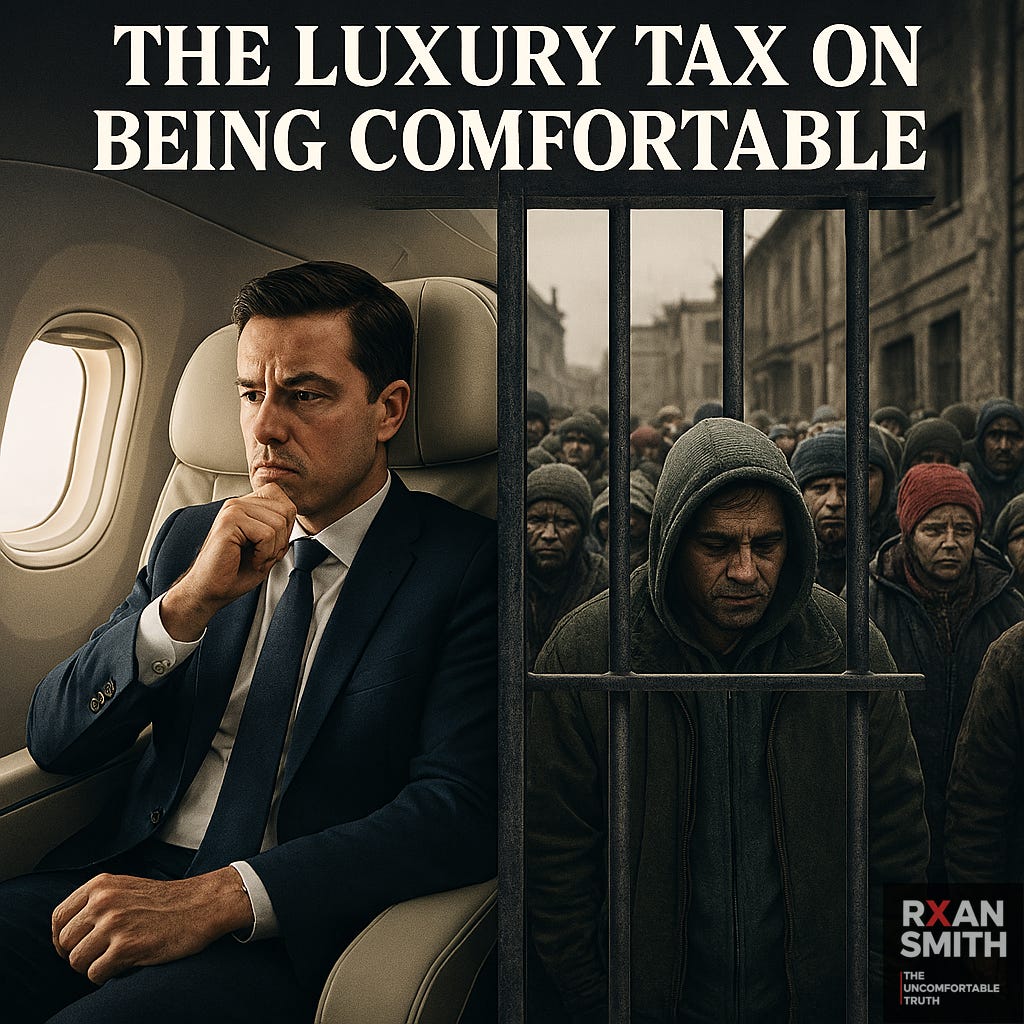
Something broke in American capitalism between 1980 and now, and the evidence isn’t hidden in economic theory… it’s printed on every price tag, every airline booking screen, every real estate listing in every city that matters.
The middle class isn’t disappearing because people stopped working hard. It’s disappearing because the cost of appearing middle class has been systematically engineered upward while the actual experience has been hollowed out. We’re paying more to feel the same, then calling it aspiration.
In the 1980s, first class cost twice what economy did. A luxury hotel room cost 50% more than standard. A high-end car cost ten times what a basic one did. Those were premiums. Today, those same categories cost 5-10x, 300-500%, and 20-25x respectively. That’s not inflation. That’s extraction.
In public, we call this “premium pricing.” In practice, it’s a wealth gate that’s slamming shut in real time. And if you’re paying attention, it’s the clearest proof yet that America stopped building a middle class and started auctioning off the aesthetic of one.
The Luxury Premium Isn’t About Quality Anymore—It’s About Exclusion
The language around premium products has always been seductive. “You deserve it.” “Treat yourself.” “An investment in quality.” But notice what’s actually changed in the product itself.
In 1980, first class meant better food, more space, superior service—genuine material upgrades. The seat was wider. The meal was prepared fresh. The flight attendant ratio was higher. You were paying double for something that cost the airline meaningfully more to provide.
Today, first class on a domestic flight means: a seat that reclines further, a drink before takeoff, and a curtain so you don’t have to see economy. The seat itself costs the airline nearly the same to install. The drink costs $4 wholesale. The curtain is fabric. You’re paying 5-10x more, and the actual cost delta to the airline is maybe 20%.
Here’s the deeper issue: when the core product degrades systematically, the premium isn’t selling enhancement—it’s selling escape from deliberate degradation.
Economy seats have shrunk from 34-inch pitch to 28 inches. Legroom has been carved out inch by inch. Meals disappeared. Baggage became à la carte. Entertainment went from free to subscription. The airlines didn’t make first class radically better—they made economy radically worse, then sold you an exit door and called it luxury.
The business reality is elegant and brutal: create suffering at the baseline, then charge people to opt out of suffering you deliberately introduced. That’s not a premium product. That’s a ransom with a loyalty program.
This is why the percentage gap matters more than the absolute price. A 150% premium in 1980 meant “we’re giving you more.” A 500% premium in 2026 means “we’re charging you not to suffer.” One is commerce. The other is structural violence with a frequent flyer program.
Air Travel: The Laboratory for Class Separation
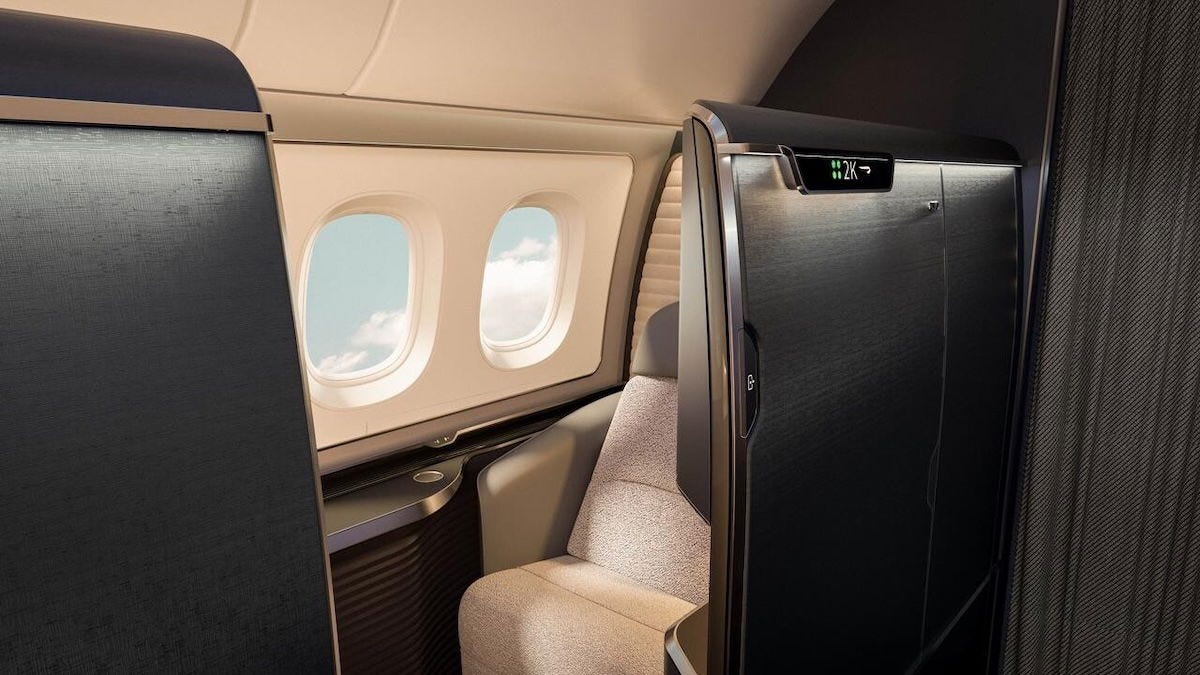
Let’s strip away the marketing and look at what actually happened when you adjust for inflation to 2026 dollars.
1980s: Economy round-trip domestic flight cost roughly $1,000-$1,200 (inflation-adjusted). First class ran $2,000-$3,000. Premium: 150-200%.
2026: Economy costs $350-$400. First class runs $1,500-$3,000+. Premium: 400-800%.

Economy got cheaper in real terms—down 40% per mile since 1990. But first class premiums tripled. You’re now paying 8x more for the same flight, and the primary difference is that you don’t have to acknowledge that other humans exist in worse conditions three rows behind you.
The percentage gap widened by 200-300% while the actual service gap narrowed. That’s not market dynamics. That’s weaponized scarcity.
The disgust you feel when you see these numbers isn’t irrational. You’re paying $500 per hour for three hours of slightly more comfortable sitting. You land at the same time. You breathe the same recycled air. Your knees don’t touch the seat in front of you, and a flight attendant calls you by name. That’s the entire upgrade.
Hotels: From Comfort Tiers to Psychological Moats
The same extraction pattern appears in every category once you know what to look for. Hotels demonstrate it perfectly.
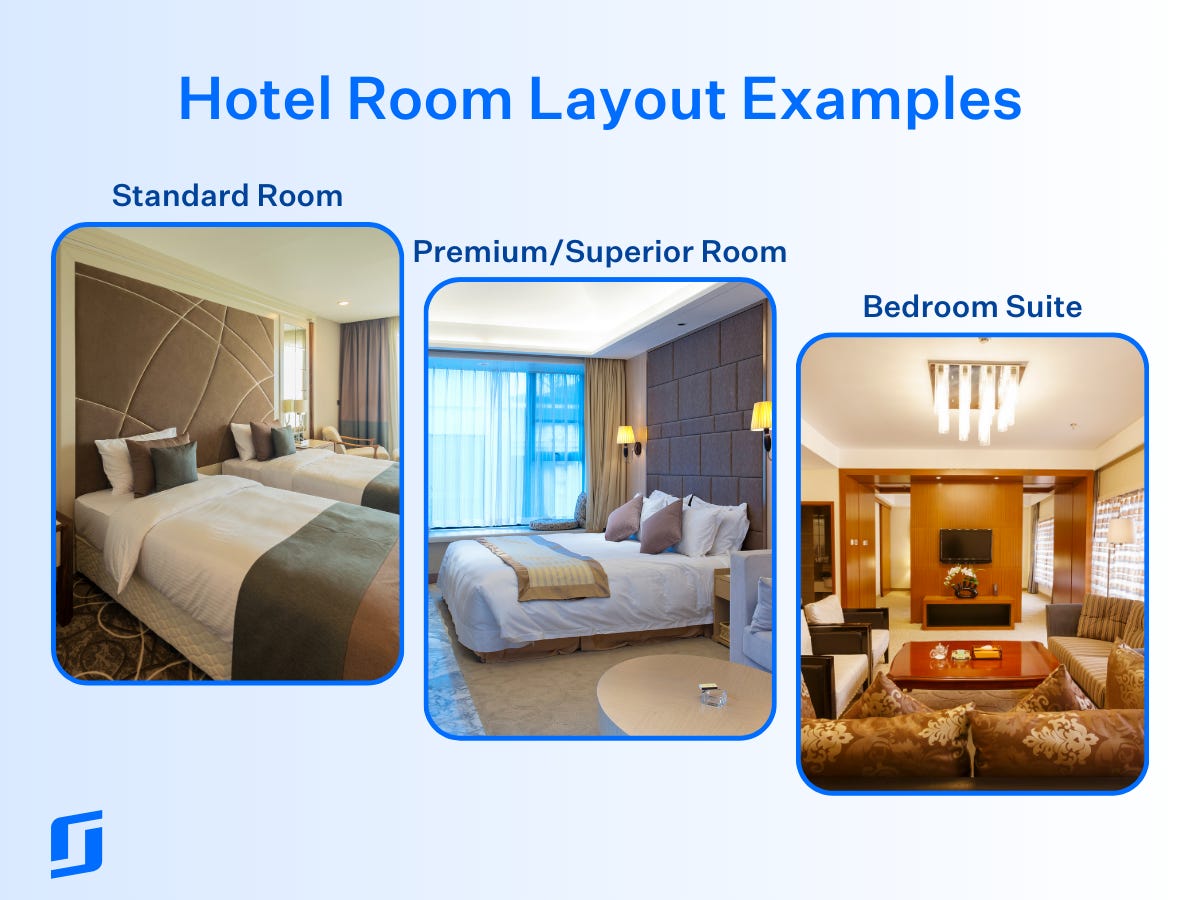
1980s: Standard room cost $150-$200 (inflation-adjusted). Luxury room cost $300-$500. Premium: 100-150%.
2026: Standard costs $150-$250. Luxury costs $500-$1,000+. Premium: 300-500%.
Standard hotel prices have essentially flatlined in real terms. But luxury rates have exploded—up 200% beyond inflation—while offering the same square footage, the same Nespresso machine, the same white duvet.
What changed? The lobby has a couch that costs $8,000. The hallway has “curated art.” You get to say “boutique” when someone asks where you stayed.
You’re not paying for better sleep. You’re paying for the psychological benefit of believing you’ve escaped the Holiday Inn even though the mattress came from the same supplier.
You’re paying $400 more per night for the same bed size, the same bathroom fixtures, and a view that’s 10% better. The sheets have a higher thread count that you can’t actually feel. The shower has rainfall and handheld options. There’s a Nespresso machine instead of a Keurig. That’s it. That’s the premium.
Housing: The Starkest Squeeze of All
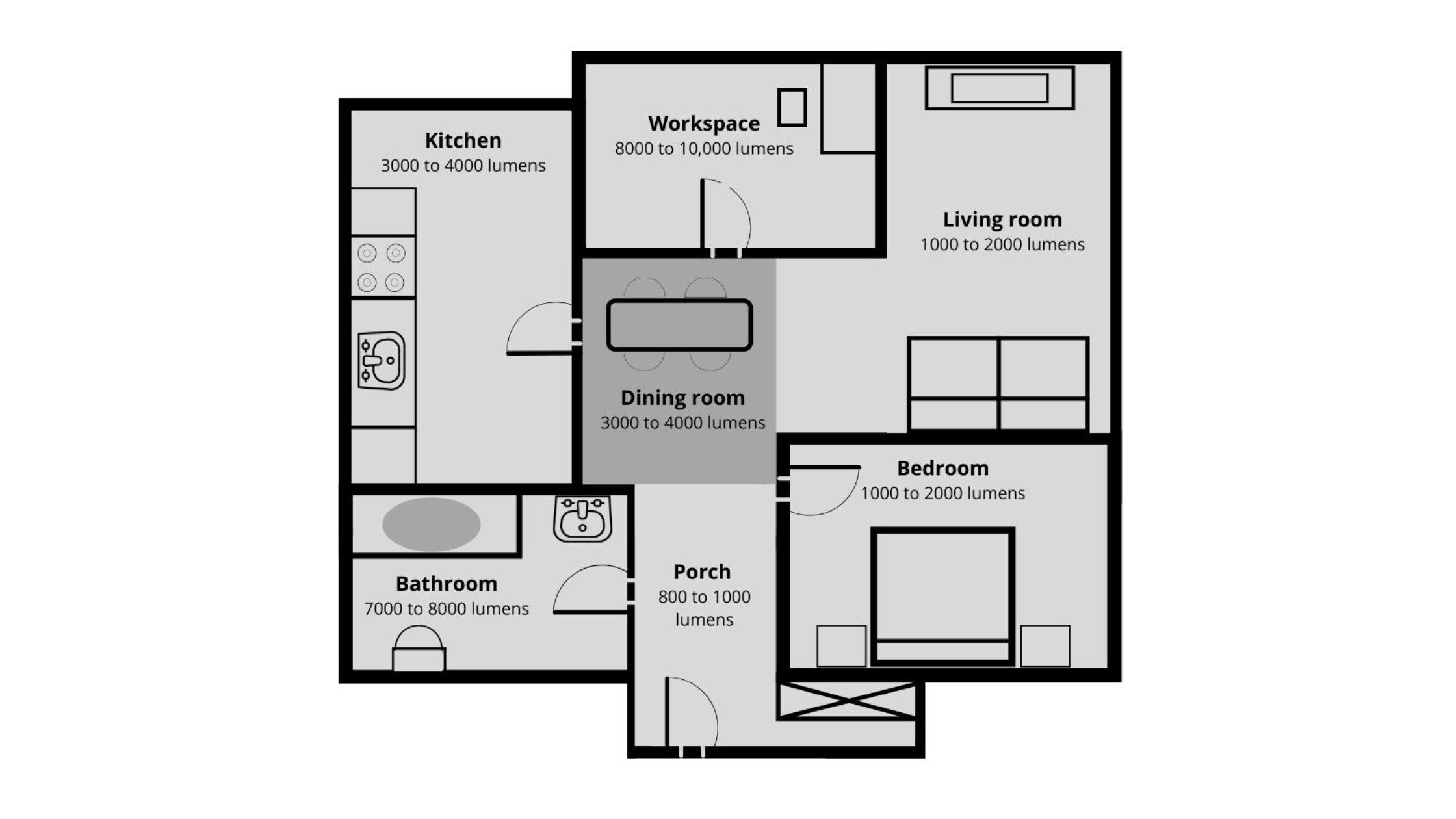
1980s: Median home cost $250,000 (inflation-adjusted). Upper-middle home cost $400,000-$600,000. Premium: 50-100%. Price-to-income ratio: 3.5.
2026: Median home costs $417,000. Upper-middle home costs $800,000-$1.5M. Premium: 100-200%. Price-to-income ratio: 5.0.
The median home held roughly steady in real terms. But upper-middle housing doubled its premium while incomes only rose 43%. The price-to-income ratio jumped from 3.5 to 5.0—a 43% increase in how many years of income it takes to buy a house.
You’re now paying twice as much relative to the baseline for a house where—as you correctly noted—you’ll spend 80% of your time in under 500 square feet. The kitchen, bedroom, bathroom—maybe 500 square feet of actual living space. The rest is “hosting space” you’ll use twice a year and “curb appeal” that impresses people driving by.
The disgust you feel isn’t irrational. You’re being charged double for “status neighbors” and “good schools” in a system that deliberately underfunds public education to make the premium feel necessary.
You’re financing square footage for theoretical future enjoyment that statistically never comes. That’s not aspiration. That’s a protection racket with a homeowners association.
Vehicles: The Ego Tax Made Explicit
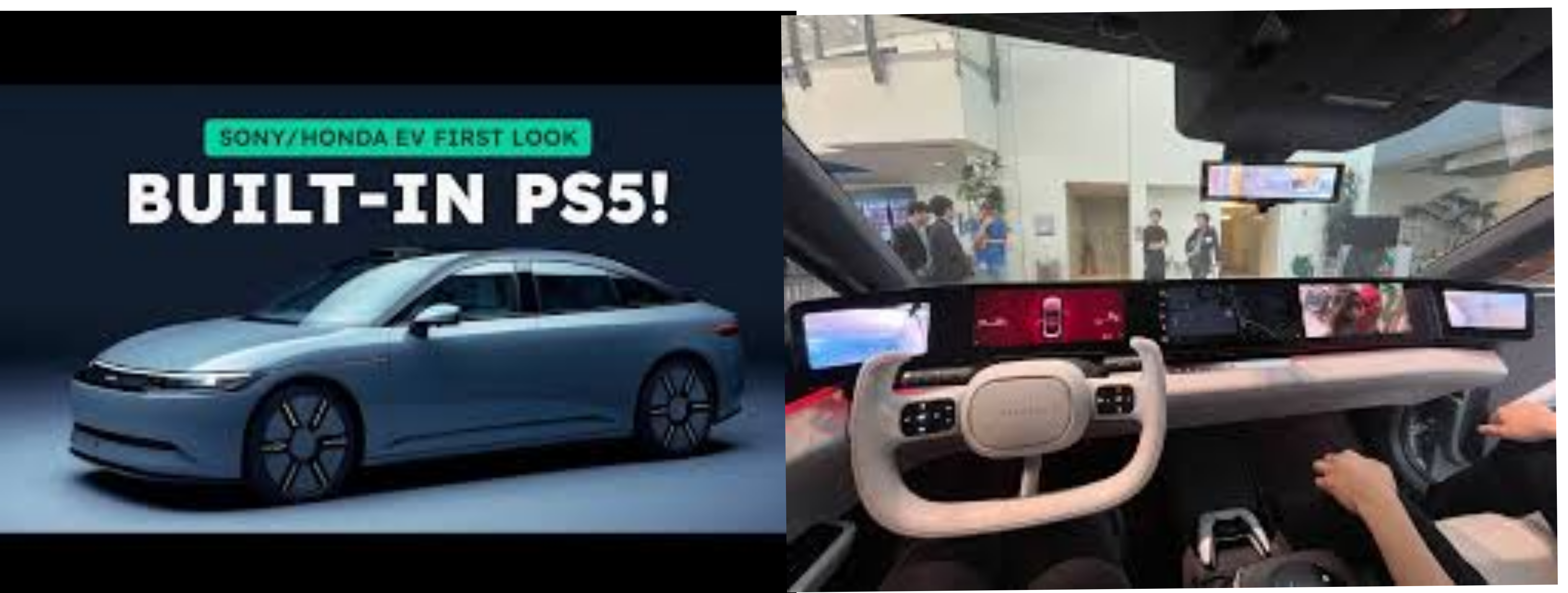
1980s: Budget car cost $15,000-$20,000 (inflation-adjusted). High-end sedan cost $100,000-$150,000. Supercar cost $400,000. Premium over baseline: 10-20x.
2026: Budget car costs $20,000. High-end sedan costs $120,000-$150,000. Supercar costs $500,000+. Premium over baseline: 20-25x.
Standard cars got more affordable in real terms and significantly better in quality—safety, reliability, features. But high-end premiums grew 100-150%.
You’re paying 25 times more for a car that hits the same red lights, sits in the same traffic, and gets you to work at the same time.
The real kicker: most luxury features are already installed in cheaper models—heated seats, advanced safety systems, premium audio. You’re literally paying to unlock what’s already in the car. BMW charges a monthly subscription to activate the heated seats that are already installed in your vehicle. That’s not luxury. That’s digital landlordism applied to physical goods.
You’re paying $100,000 extra for a vehicle that spends 95% of its life either parked or stuck in traffic. The 0-60 time is irrelevant on public roads. The Italian leather seats feel marginally nicer for your 35-minute commute. The badge on the hood broadcasts to strangers that you can afford the badge. That’s the product.
Fashion: Investment Pieces or Speculative Assets?
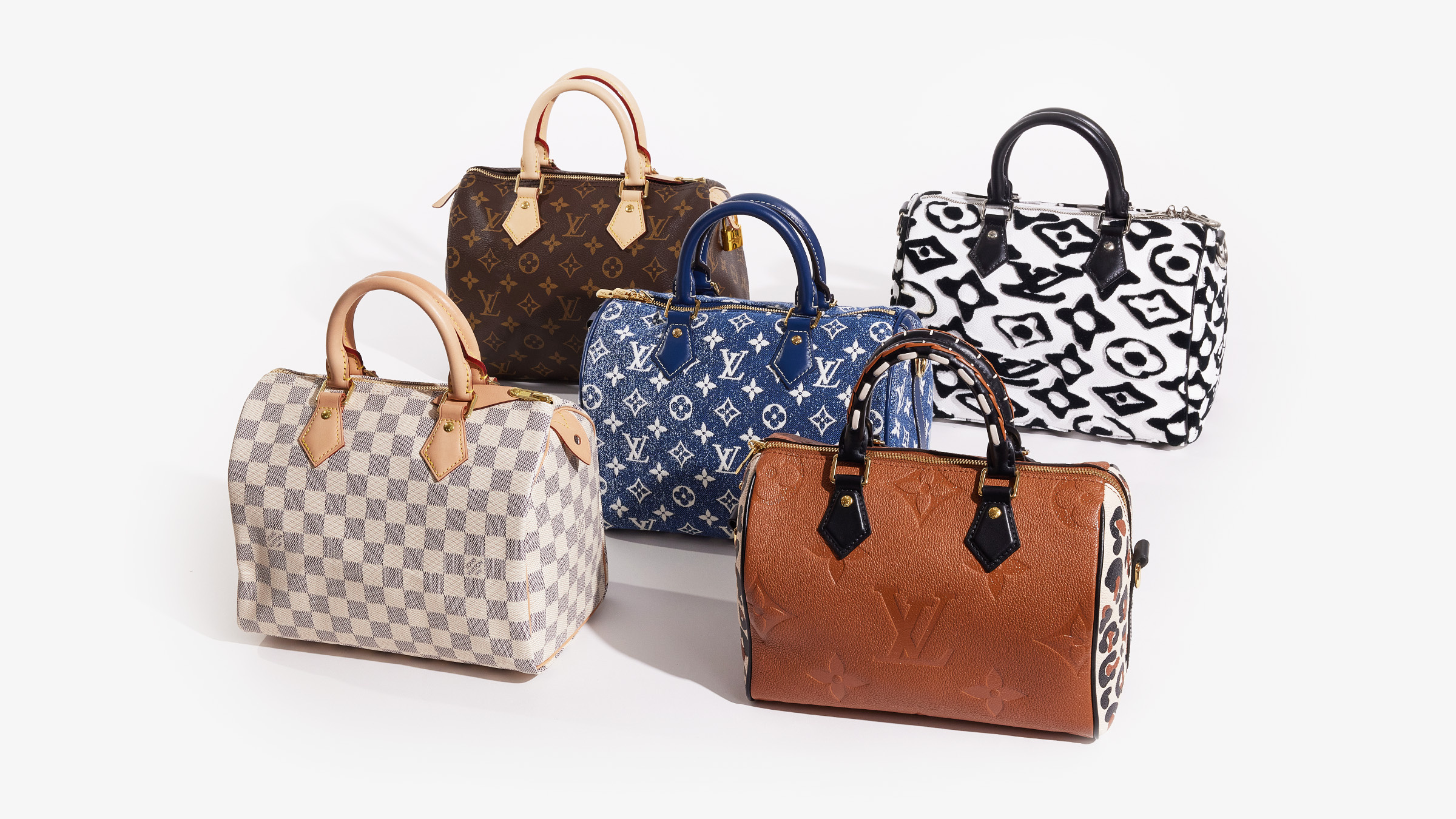
1980s: Standard handbag cost $50-$100 (inflation-adjusted). Louis Vuitton Speedy cost $500-$700. Premium: 5-10x. Rolex Submariner cost $4,000.
2026: Standard handbag costs $50-$100. Louis Vuitton Speedy costs $1,600+. Premium: 20-30x. Rolex Submariner costs $9,150.
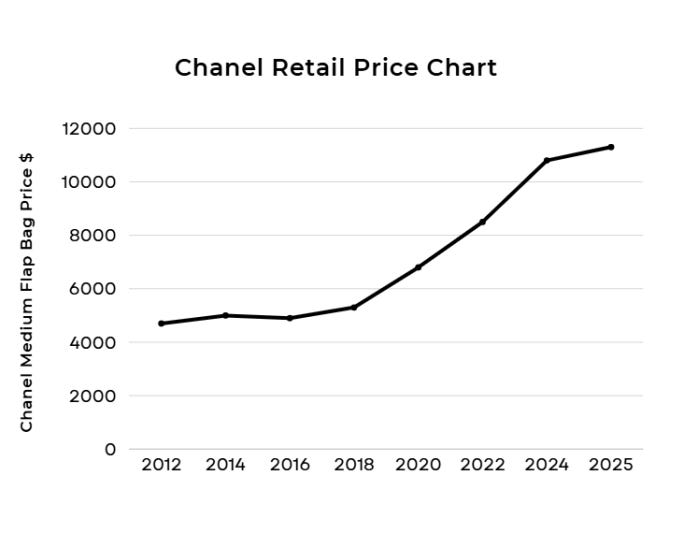
Designer handbag premiums tripled. Watch premiums more than doubled. And here’s what didn’t change: the bag still holds your stuff. The watch still tells time.
But now they’re “investments”—a word we started using when we needed to justify paying 30x more for functionally identical products.
You’re paying 30x more for a bag that holds the same items. The craftsmanship is legitimately better—but not 30x better. The primary difference is the logo, which signals to other people who recognize the logo that you paid the premium. You’re buying semiotics, not utility.
The Pattern Is Identical Across Every Category
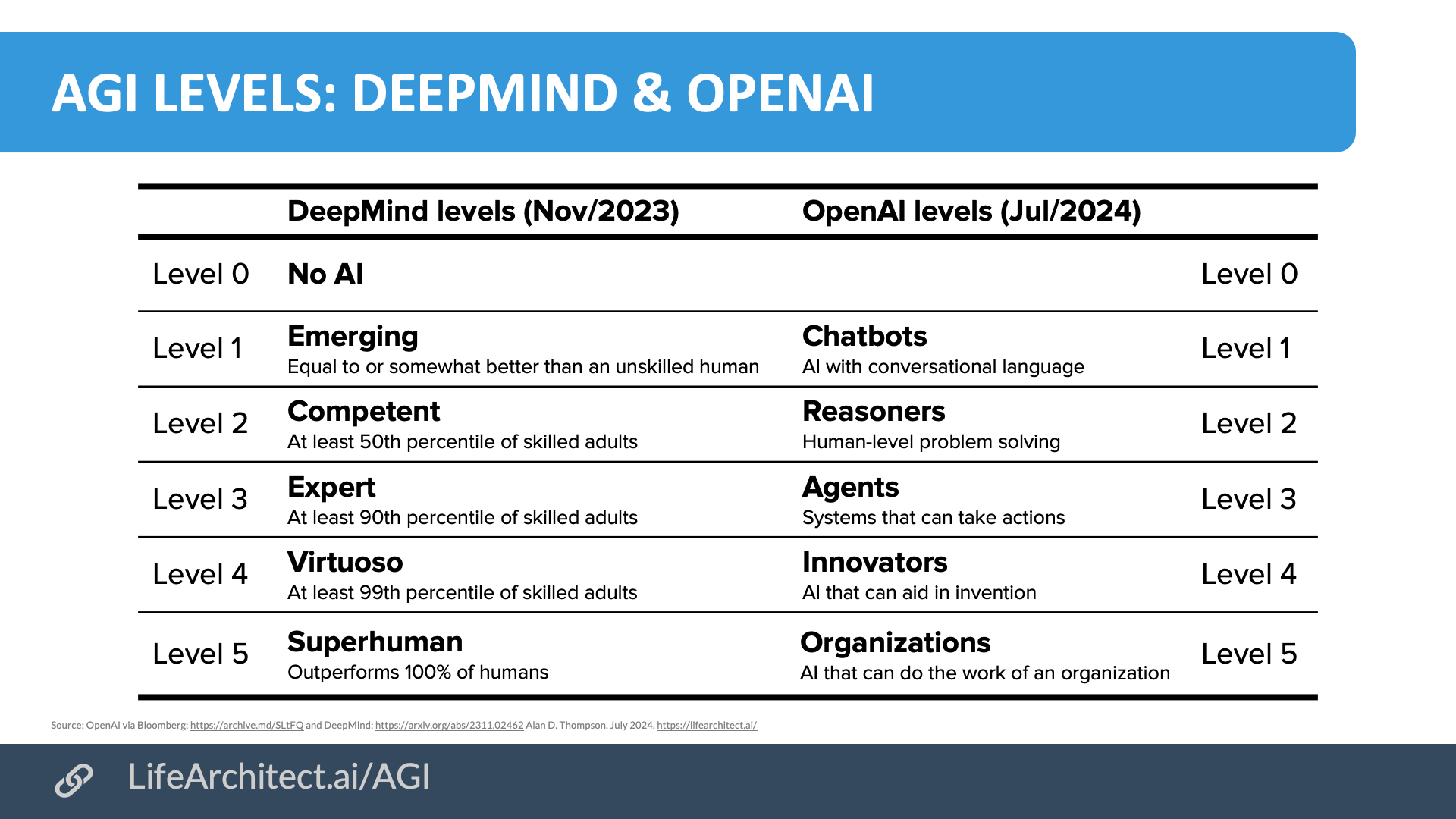
Notice what these numbers reveal:
Baseline products improved and held steady or declined in real cost - Economy flights, standard hotels, median homes, budget cars, regular bags all became more affordable or stayed flat
Premium products exploded in price while converging toward baseline quality - The actual material difference shrunk as the price gap grew
The gap widened not because luxury got better, but because we normalized paying more for less - Marketing shifted the value proposition from tangible to psychological
Marketing shifted from “better materials” to “exclusive access” - The premium stopped being about the product and became about the separation
The premium became a tax on wanting to feel separated from the masses - You’re paying for psychological distance, not material quality
This is the compounding loop everyone misses: every price increase validates the next one, because the people who can still pay become more invested in believing the premium is justified. Admitting you’re getting gouged means admitting you’re complicit.
The Global Reality Check: Everywhere Else Thinks We’re Insane
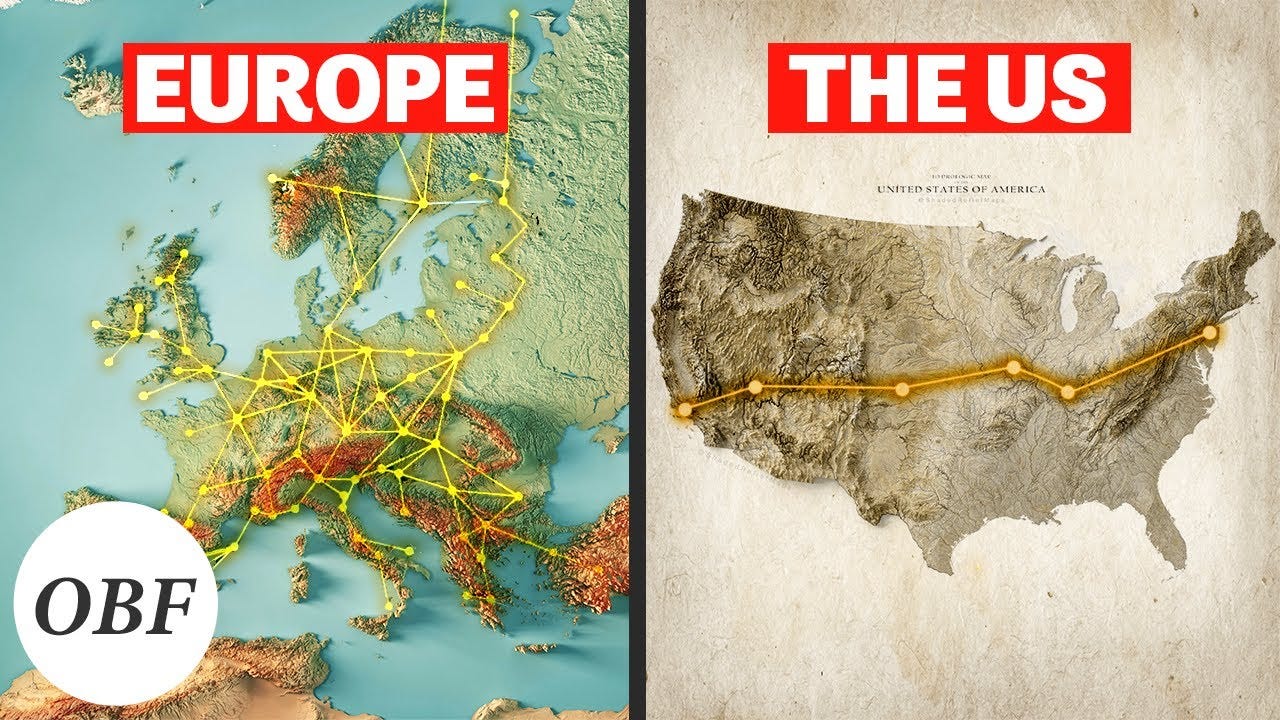
Travel outside the American consumer bubble and you’ll see the contrast immediately. In India, Japan, much of Europe—status symbols are appreciated, but they’re not load-bearing structures for self-worth.
People prioritize reliable transport from A to B over car payments that equal rent. Owning a car in major cities isn’t impressive—it’s often inconvenient and expensive compared to walking, transit, or ride-sharing. The idea of paying double your mortgage to live in the “right” neighborhood is met with confusion. Why would you bankrupt yourself for marginally better drywall?
This isn’t because other cultures lack wealth. It’s because they haven’t fully commodified psychological distance from the bottom as aggressively as America has.
In most developed countries, the baseline is higher. Public transit works. Healthcare doesn’t bankrupt you. Education is affordable. Housing, while expensive, hasn’t fully decoupled from wages. The “premium” tier exists, but the gap isn’t existential—it’s preferential.
America inverted this. We degraded the baseline systematically—crumbling infrastructure, unaffordable healthcare, student debt, housing crisis—then sold premium tiers as the only escape from conditions we created.
That’s why the luxury tax feels so grotesque. You’re not paying for something better. You’re paying to avoid something worse that didn’t have to exist in the first place.
The Illusion of Progress: You Can’t Win Anymore, You Just Choose Where You Lose
The American Dream used to have a simple formula: work hard, earn more, live better. The “better” was supposed to arrive. Bigger house. Nicer car. More comfort. More security. The ability to stop worrying about money.
But something broke in the compounding loop. Now the “better” never arrives—it just moves further away at the exact rate you approach it.
You get the promotion. The luxury car tier you were targeting is now priced 20% higher. You save for the down payment. The neighborhood you wanted is now 40% more expensive. You finally afford first class. The new ultra-premium cabin makes first class look like business, and business look like economy-plus.
The goal posts aren’t just moving. They’re on a treadmill that accelerates as you get closer.
This is the recursive trap of luxury pricing: it’s designed not to be attained, but to be pursued. Because the moment you arrive, the tier above you expands, and your achievement is reclassified as “entry-level premium.”
You can’t win anymore. You just get to choose where you lose with the least friction.
Want the nice house? You’ll be house-poor. Want the luxury car? You’ll finance it for 7 years. Want the designer bag? You’ll save for months. Want first class? You’ll justify it as “treating yourself” while sitting in a seat that costs more than some people make in a week.
Every choice is a trade-off, and every trade-off is a tax on wanting to feel like you’re not losing.
The Real Product: Separation, Not Comfort
Stop thinking about luxury purchases as upgrades. Think about them as insulation infrastructure.
The tinted car windows aren’t about privacy—they’re about not making eye contact with the person on the sidewalk. The gated community isn’t about security—it’s about not seeing the neighborhood that can’t afford the gate. The first class curtain isn’t about service—it’s about not being reminded that 200 people are sitting in worse conditions subsidizing your legroom.
Every premium tier is selling the same core product: the ability not to notice.
Not to notice the traffic. Not to notice the inequality. Not to notice that your “luxury” is just slightly better packaging around the same systemic dysfunction everyone else endures.
Luxury used to mean you arrived somewhere better. Now it means you disappeared from somewhere worse.
And that’s what keeps the whole system running. As long as enough people can still afford to pay the tax, they’ll keep paying it—because the alternative is acknowledging that they’re much closer to the bottom than they are to the top, and that the gap is widening faster than they can climb.
The people who can afford first class don’t want to sit in economy because it forces them to confront how thin the margin really is. One bad quarter, one medical emergency, one layoff, and suddenly the curtain is on the other side.
So they pay. Not because first class is worth 8x more. Because believing it is helps them sleep at night.
The System Perpetuates the Divide on Purpose—And We’re Complicit
Here’s the part no one wants to say out loud: this isn’t happening to us. We’re choosing it. Every time we pay the premium, we validate the pricing. Every time we finance the luxury car, we signal that the market will bear it. Every time we brag about the upgrade, we reinforce the idea that paying more makes you better.
The system works because we’re complicit in our own extraction.
And the worst part? The people getting gouged the hardest are the ones defending it most aggressively. Because admitting you overpaid means admitting you were conned. And admitting you were conned means admitting that all the “investments” you made in status were just renting the appearance of success.
The middle class is disappearing one convenience fee at a time. One luxury tax at a time. One “treat yourself” purchase at a time.
And we keep paying. Because the alternative—sitting in economy, staying at the Holiday Inn, driving the Corolla, carrying the no-name bag—feels like failure in a system that’s redefined success as the ability to pay more for the same thing.
What Comes Next: Either We Demand Better Baselines, or We Accept Permanent Tiers
The pricing trends are clear. The gap is widening. The baseline is degrading. The premium is rising. And the number of people who can afford to keep paying is shrinking.
So we’re heading toward one of two futures:
Future One: We collectively demand that the baseline be raised. Better public transit so car ownership isn’t mandatory. Affordable housing so you don’t have to pay double for “good schools.” Universal healthcare so medical emergencies don’t require luxury-tier insurance. Infrastructure investment so the economy experience doesn’t feel like punishment.
This future requires rejecting the idea that comfort is a luxury. It requires building a society where the baseline is dignified, and the premium is truly optional.
Future Two: We accept permanent tiering. Economy class for the masses. Premium for the shrinking middle. Ultra-luxury for the top. And we keep paying the tax to feel like we’re on the right side of the curtain, even as the curtain moves closer to us every year.
One story says luxury pricing is innovation, and people should pay what things are worth. The other story says luxury pricing is extraction, and we’ve been swindled into paying more for less while calling it progress.
The first story keeps the system running. The second story asks why we’re running it at all.
And once you see it as a tax—once you recognize that you’re being charged to avoid suffering that was deliberately introduced—every purchase becomes a referendum.
Not on whether you can afford it.
On whether you’re willing to keep paying a system designed to gouge you.
The real luxury left isn’t first class, or the designer bag, or the gated community.
It’s giving enough of a damn about the people stuck in economy that you demand the whole plane be better.
YouTube: https://youtube.com/@RealRxanSmith
X (formerly Twitter): https://x.com/rxannsmith
Threads (personal): https://threads.net/rxansmith
Threads (secondary): https://threads.net/smithrxan
Instagram (main): https://instagram.com/rxansmith
Instagram (secondary): https://instagram.com/smithrxan
TikTok: https://tiktok.com/@rxansmith
Patreon: https://patreon.com/rxansmith
Facebook: https://facebook.com/Ryan.X.Smith
Paypal (donations/tips): https://paypal.me/phireballsports
Buy Me a Coffee: https://buymeacoffee.com/rxansmith
If