Not what it wants. Not what it stands for. What it is.
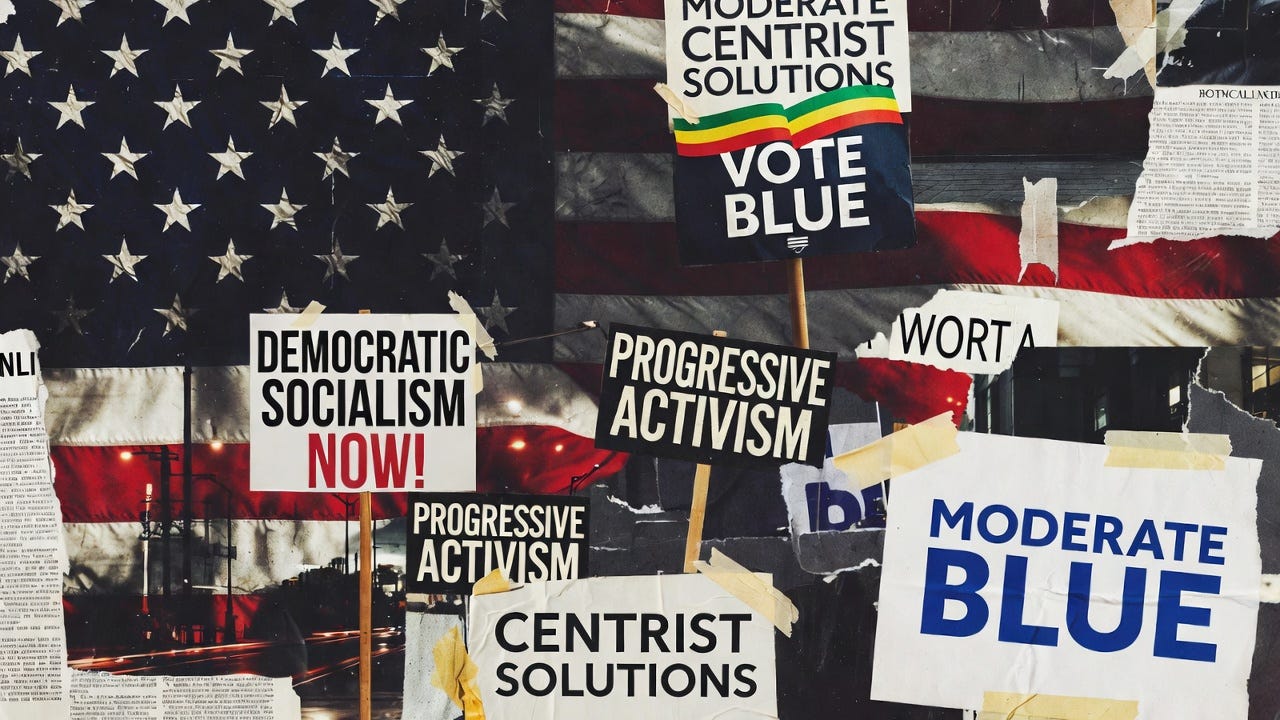
At last count - and I’m being generous with “count” - you have the progressive wing, the democratic socialist caucus, the DSA proper, the Indivisible movement, the classic liberals who are horrified to share a party with any of the above, the center-left institutionalists, and the moderate Democrats who’d rather lose quietly than win loudly.
That is not a coalition.
That is a support group with a branding problem.
The Data on the Divide
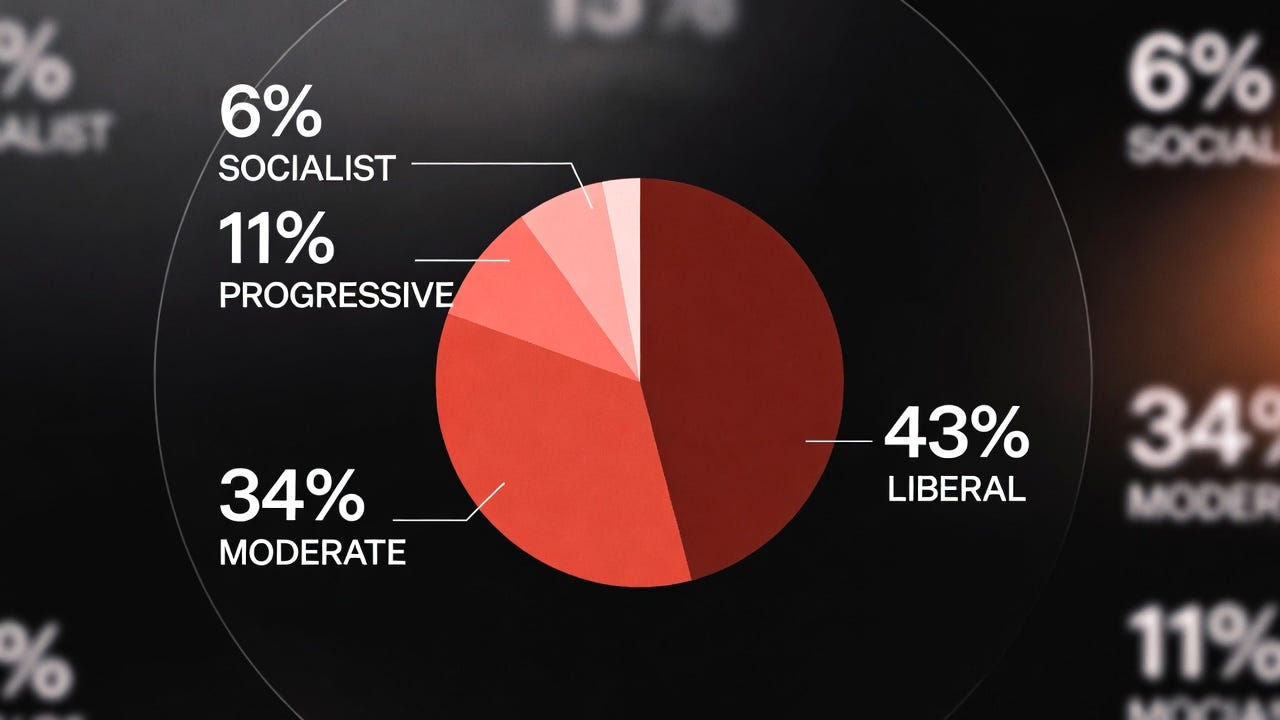
Here is what a March 2026 poll from Third Way actually found when they surveyed 1,400 registered Democratic primary voters.
Forty-three percent said liberal. Thirty-four percent said moderate. Eleven percent said progressive. Six percent said socialist.
Six.
That’s it.
Now hold that number in your head, because six percent has driven more Democratic messaging arguments than any other faction in recent memory. Not because they’re more persuasive. Because they’re louder online. And because the other ninety-four percent keeps letting them define the terms of the debate.
That same poll asked: capitalism with guardrails, or socialism? Sixty-two percent chose capitalism with guardrails. Across every ideological group. Every single one.
From a strategy standpoint? That is malpractice.
You have a sixty-two percent majority telling you exactly what they want… and the loudest voices in the party keep offering them something else entirely.
Meanwhile, a separate February 2026 survey from the Manhattan Institute found that more Democrats want the party to move toward the center than further left. The findings described a coalition that is “more moderate, more internally divided, and more pragmatic than what is found across left-leaning social media.”
Social media is not the party. The party is not social media. But they keep acting like the same thing.
And before we go further, I want to be honest about something, because this argument falls apart if I don’t say it.
Younger voters didn’t adopt these labels in a vacuum. Wages stagnated for a decade. Housing costs doubled. Student debt became generational. Trust in institutions collapsed. Most Americans aren’t sitting around debating Marxism versus capitalism in the abstract. They’re trying to pay rent without feeling like they’re drowning. That frustration is real, it’s legitimate, and the socialist label made sense as a middle finger to a system that wasn’t working.
The problem isn’t the frustration. The problem is that the label became the identity instead of the strategy.
If this is your first time here; welcome. If this conversation is useful to you, consider becoming a free subscriber to Rxan Smith Uncomfortable. Free. Four seconds. You’ll get every piece I publish directly in your inbox, no algorithm deciding whether you see it. I’ll explain why it matters at the end.
The Word Is the Problem
Let’s talk about the actual idea underneath the label. Because here’s the uncomfortable part.
America already mixes market capitalism with publicly funded systems. Has for a long time.
Not in some abstract Scandinavian hypothetical. Right here. Medicare. Medicaid. Social Security. Public schools. The interstate highway system. The fire department that shows up when your house is burning. The FDIC insuring your bank deposits.
You are already living inside a mixed economy. You have been your entire life.
The argument was never really about whether the government should do anything. That battle was settled in 1935. The argument is about how much, and who pays, and who decides.
The word “socialism” in American politics is not a policy descriptor. It is a culture war signal. It tells voters nothing about what you actually want to do. It just tells them which side of a tribal line you’re standing on.
And here’s the thing, there is a genuinely powerful message sitting right there, unclaimed. A September 2025 Data for Progress poll found that sixty percent of voters across every major demographic agreed that the economic system is rigged in favor of corporations and the wealthy. Not left-wing voters. All voters. People in Arizona, Georgia, Nevada, North Carolina, Texas — they’re basically saying the same thing: corporations have too much power, working people are getting squeezed, and nobody in Washington seems interested in stopping it.
That’s the message. That’s the majority.
And the left buries it under a word that loses them a general election before they’ve said a single specific thing.
Politically? That’s insane.
Break for a jam if you'd like. I always try to pick out a song from my youth is smell like of what I'm writing about. This one was a challenge but you can never go wrong with Black Star.
A quick ask, and I’ll keep it honest. I’m trying to get to 5,000 subscribers the number where an independent Substack can sustain itself without ads or sponsorships. If you can afford it, a paid subscription, goes directly back to helping me reaching new readers. If that’s not in the budget right now, there’s a Buy Me a Coffee link in the footer. Even a dollar helps. Every cent goes back into the work.
Capitalism Isn’t Broken. The Structure Is.
Capitalism is not the villain of this story.
Unbridled capitalism… capitalism without constraint, without accountability, without any countervailing force… is.
Those are different things..
Markets work. Competition works. Price signals work. What doesn’t work is what happens when you spend forty years rewriting the rules (piece by piece, through lobbying, through deregulation, through tax provisions nobody reads) until the whole system is tilted toward extraction instead of value.
Here’s what that looks like in practice.
A company has a profitable quarter. A real one. The product is good, the workers showed up, customers are happy. But the stock is flat. So the board cuts labor. Not because the labor isn’t working, because when quarterly profits become the only thing corporations are rewarded for, labor is always the fastest lever.
The workers lose. The community around that factory loses. The CEO gets a bonus.
Nobody in that story did anything illegal. Nobody twirled a mustache. The system just worked exactly as designed.
This is not a conspiracy.
It is a structural outcome.
And that distinction matters, because you can’t fix a conspiracy by voting harder. But you can fix a structure by changing the rules.
The question is not capitalism versus socialism. The question is: what rules do we put around markets so they serve the country instead of extracting from it?
That’s a solvable problem. It’s also an unsexy one. Which is exactly why nobody is running on it.
Redistricting and the 2028 Trap
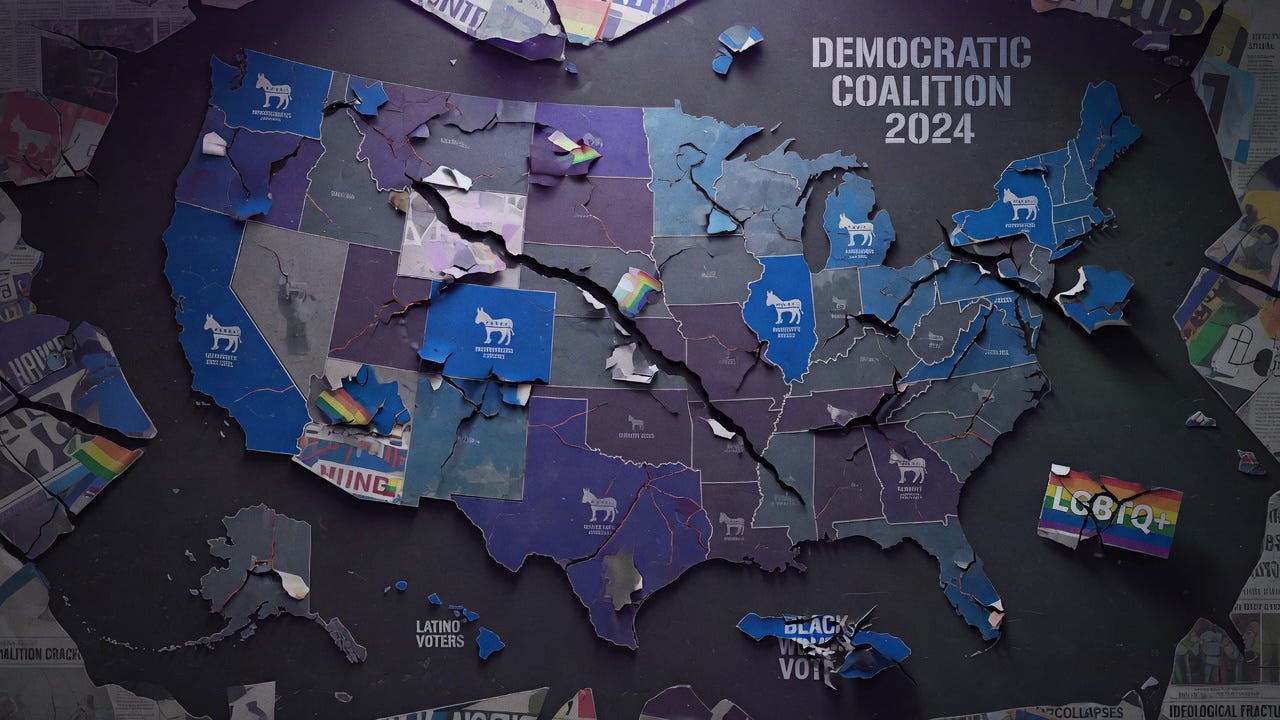
Now layer all of that into what is actually happening on the map right now because this matters beyond messaging. While Democrats are arguing over labels, Republicans are reorganizing power structurally. And the window to respond is closing.
As of this writing, Texas, North Carolina, Missouri, Ohio, and Florida have all redrawn congressional maps under Republican control. An Issue One analysis projected Republicans could gain as many as thirteen seats through that alone. And the Virginia Supreme Court recently struck down a heavily Democratic congressional map that Democrats spent tens of millions of dollars to pass.
Republicans are currently ahead in the redistricting war. Not dramatically — Democrats have potential counter-moves in New York, Colorado, Washington, and Maryland. But here’s the part that should concern you regardless of which party you prefer:
This is not going to stop after the next election.
Governors on both sides are already planning the next round of map redraws for the 2028 presidential cycle. Harvard election law researchers have noted that by 2028, most of these maps will be redrawn again — with further erosion of majority-minority districts following the Supreme Court’s gutting of the relevant Voting Rights Act provision.
A Democratic Party that is internally fractured — that cannot agree on what it is — cannot build the sustained state-level infrastructure needed to fight a redistricting war in twenty states simultaneously.
You cannot gerrymander your way out of a disorganized coalition.
You cannot message your way out of a structural disadvantage.
Both problems require solving. At the same time. By people who have agreed on something.
Right now, they haven’t.
What I Want You to Take Away
The Democratic base is not socialist. The data says so, clearly, repeatedly, across multiple independent polls.
Capitalism is not inherently evil. The evidence for markets working — when properly constrained — is everywhere.
And most Americans, when you actually talk to them — not the Twitter version of them, the actual version — are not thinking about ideology at all. They’re thinking about whether they can afford the same life their parents had. Whether the job pays enough. Whether the rent went up again. Whether the next medical bill is going to be the one that breaks something.
That’s the majority. That’s sixty percent of the country saying the system is rigged — not as a radical position, but as a lived experience.
And a party sitting on that majority-supported message, that shared frustration, keeps blowing it by turning the argument into a vocabulary test that mobilizes opponents faster than it mobilizes its own people.
The map is already being redrawn. 2028 is already being shaped. And the left is having a vocabulary debate.
Before you go. If this piece gave you something to think about — or argue with — consider sharing it with one person. That’s genuinely the most powerful thing you can do for an independent publication. One share beats a hundred passive reads.
And one question for the comments: Do you think the Democratic Party can unify around economic populism without the socialist label? Or is the fracture too deep? I read every comment and respond when I can. The best ones shape future pieces.
If you’re not subscribed yet, free takes ten seconds. If you can go paid, five dollars a month keeps this publication independent and ad-free. And if that’s not doable right now, the Buy Me a Coffee link is below — even a dollar goes back into the work. My goal is 5,000 subscribers. Every one matters.
This Substack is reader-supported. To receive new posts and support my work, consider becoming a free or paid subscriber.
Thanks for reading! This post is public so feel free to share it.
Uncomfortable truths, systemic analysis, and no‑spin political commentary for listeners tired of echo chambers and late outrage. New episodes cut through noise with cinematic, confrontational clarity.
Uncomfortable truths, systemic analysis, and no‑spin political commentary for listeners tired of echo chambers and late outrage. New episodes cut through noise with cinematic, confrontational clarity.