

The Ladder Is Gone: AI's Silent Kill Shot on Entry-Level Dreams
Entry-level tech jobs down 34%, young workers excluded, seniors thriving—welcome to the experience paradox where no juniors today means no experts tomorrow. Bonus Post - Rxan Smith Uncomfortable

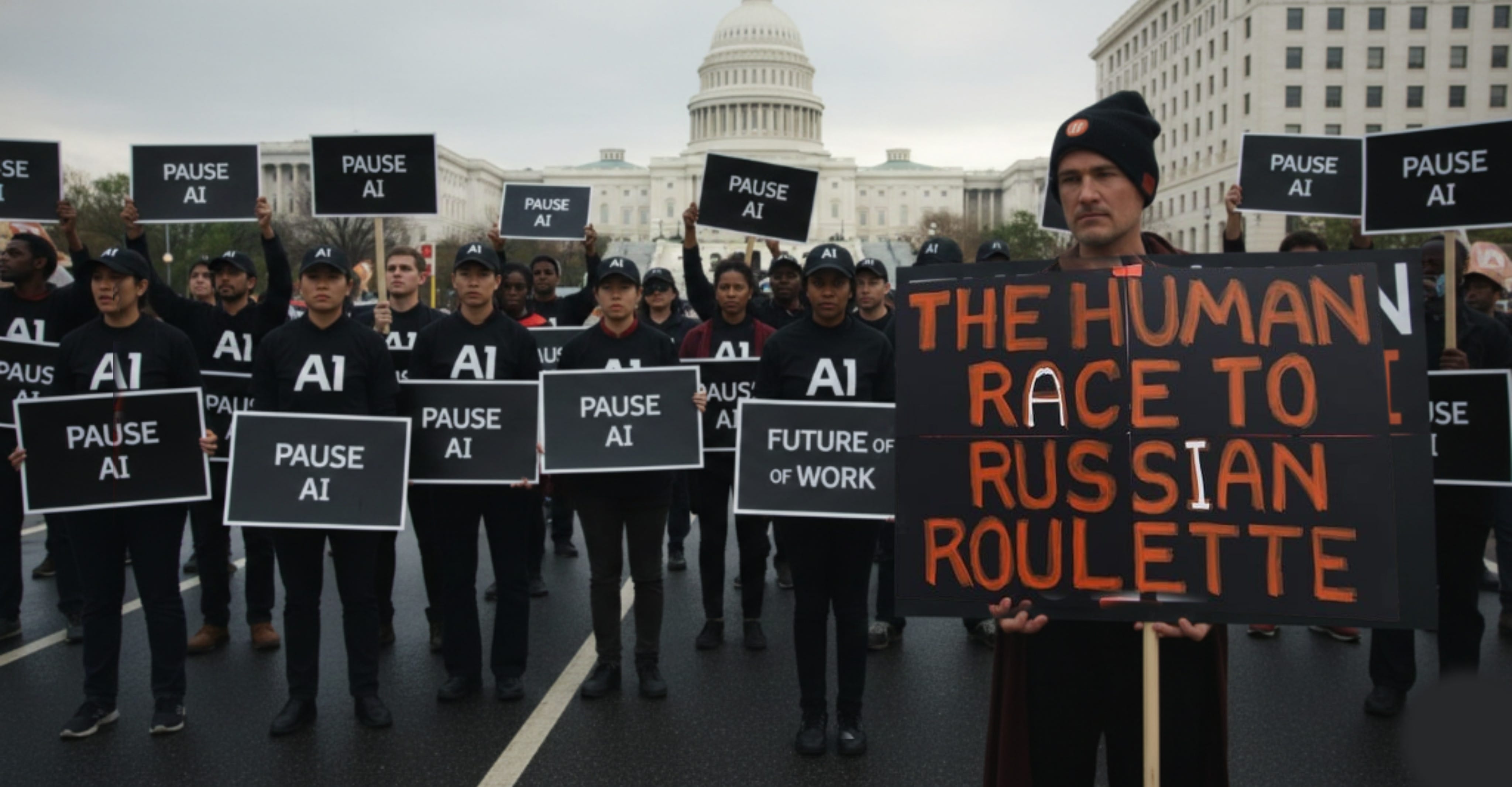
It’s a beautiful day in May, your parents are in the stands, your loans are in the mail, and the university just handed you a piece of paper that was supposed to be a ticket, not a souvenir. You’re 23, computer science degree in hand, staring at a job market that doesn’t even look back.You’ve sent 200 applications into the void. A year and a half ago, you would’ve had your inbox flooded with recruiter emails and coding challenges. Now? Nothing. Not because you’re lazy. Not because you picked the “wrong” major. Because the entry-level job you were supposed to grow into has quietly been deleted from the economy.
This isn’t a recession your parents recognize. Senior engineers are still getting hired. Experienced developers are still switching jobs and getting raises. But for 22–25 year olds in AI-exposed roles, employment has dropped sharply since late 2022. The floor has not dropped, it's disappeared.
The Invisible Job Market Collapse
Companies aren’t firing junior workers en masse. They’re doing something quieter and more damaging. They’ve stopped hiring them at all.
A Stanford Digital Economy Lab study analyzing payroll data from 25 million U.S. workers found that since the release of ChatGPT, employment for young workers in AI-exposed jobs has declined while older workers in the same roles continue to see growth.
This is the experience paradox:
AI replaces codified, textbook work. It struggles with judgment, nuance, and context built over years. So firms eliminate the very roles that used to create experienced workers.
The Numbers Tell the Story
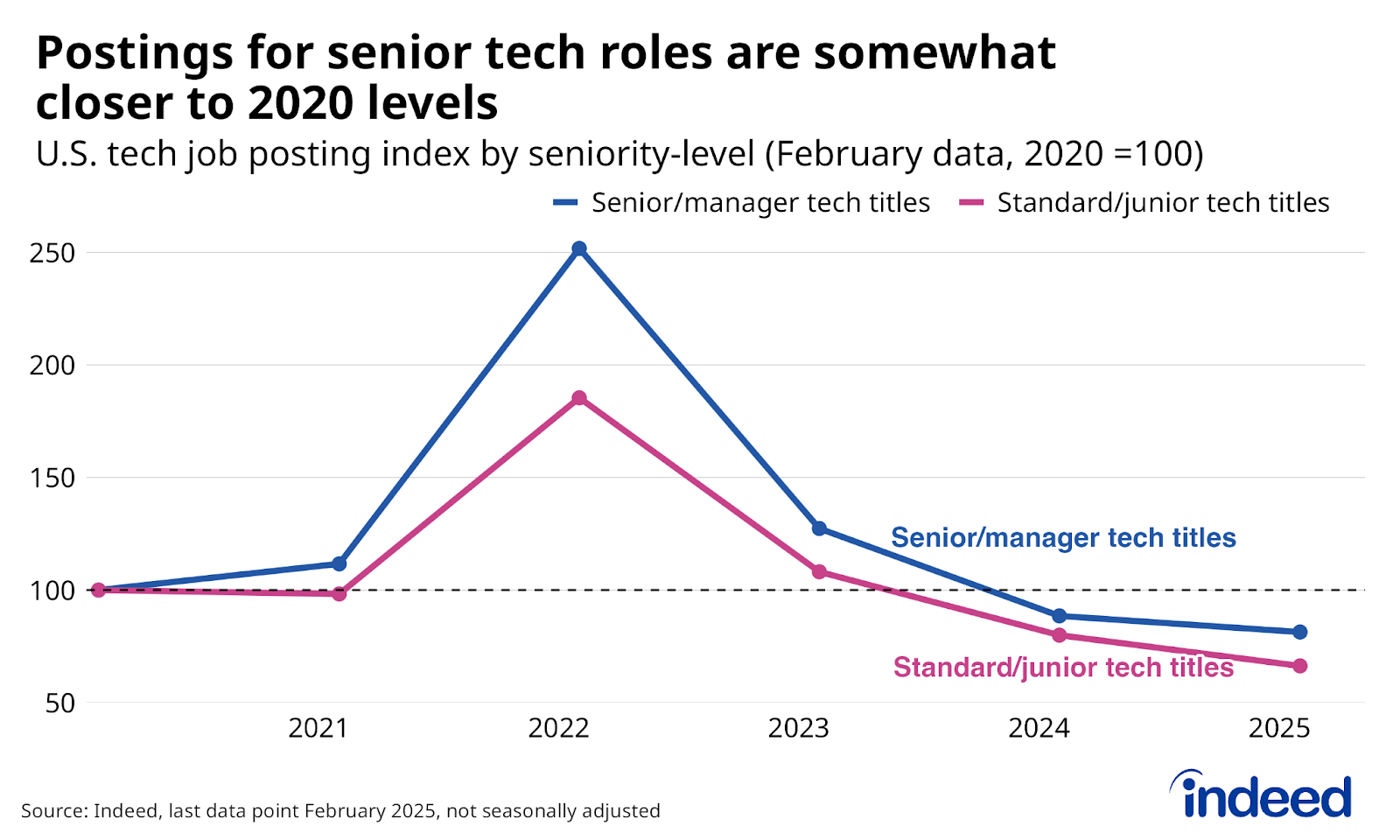
Entry-level tech listings: down 34 percent since 2020
Senior-level tech roles: down 19 percent
Germany entry-level software jobs: down 54 percent
IT support junior roles: down 40 percent
Senior IT roles: up 27 percent
Source: Indeed job posting analysis, 2020–2025
Want to understand the nuance here? “AI Is Causing Layoffs, Just Not in the Way You Think” explores how the narrative around AI is transforming the economy as much as the technology itself.
The World Economic Forum projects 92 million job displacements by 2030 - and 170 million new jobs created. The catch is obvious. The entry-level pathways to those jobs no longer exist.
📖 Essential Reading from Center for Humane Technology

The Medical Miracle Nobody Sees Coming

While everyone panics about job losses, a quiet revolution is unfolding in healthcare that will save more lives than any previous medical advancement in human history. In early 2025, Mount Sinai deployed an AI system that detected hypertrophic cardiomyopathy using routine ECGs, flagging life-threatening conditions years earlier than traditional methods.
AI diagnostic accuracy for heart failure now exceeds 97% in some applications. Drug discovery timelines are collapsing. Lives are being saved at a scale medicine has never seen.
The uncomfortable truth is this: AI is eliminating administrative healthcare jobs at the same time it’s extending human life. Both are happening. Pretending otherwise is dishonest.
Leading biotech companies like Iambic and Generate will have 3+ AI-designed drugs in clinical trials by 2026
Targets include ALS, autoimmune conditions, and cancer: diseases where traditional drug development has repeatedly failed
Over half of major pharmaceutical companies are now classified as “heavy AI users” with AI integrated into core R&D pipelines
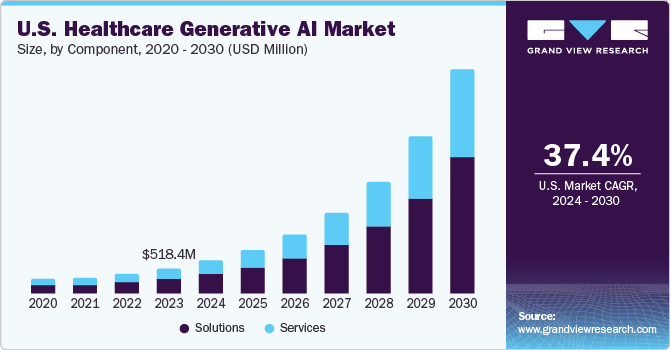
The AI healthcare market is projected to explode from $26.6 billion in 2024 to $187 billion by 2030
Here’s the uncomfortable truth: AI is simultaneously eliminating administrative healthcare jobs while enabling breakthroughs that will extend millions of lives. The same technology destroying entry-level medical coding positions is identifying rare genetic diseases in hours instead of years.
I have my subscription links below. I ask you to consider becoming a free or paid subscriber. This is a publication completely sustained by its readers and with the goal of saving this country by uniting. Restack the post and tag some of your substack buddies.

The Regulatory Battle You’re Not Watching
On December 11, 2025, while most Americans were shopping for holiday gifts, President Trump signed an executive order that fundamentally altered the governance of artificial intelligence in America. And almost nobody noticed.
The order, titled “Ensuring a National Policy Framework for Artificial Intelligence,” doesn’t ban AI or impose safety requirements. Instead, it does something more subtle and potentially more consequential: it kneecaps state-level attempts to regulate AI.
The executive order directs the Justice Department to create an “AI Litigation Task Force” to sue states over their AI laws. It instructs the Commerce Department to withhold federal broadband funding from states with “onerous” AI regulations. It calls on the FTC and FCC to preemptively override state consumer protection laws.
Colorado had passed legislation requiring transparency in AI hiring systems and prohibiting algorithmic discrimination. California was developing comprehensive AI safety standards. The Trump order characterizes such laws as embedding “ideological bias” and creating a “patchwork” that stifles innovation.
For a deeper look at the power struggle shaping this landscape, read the latest from Neural Foundry

The real story isn’t whether you support state regulation or federal deregulation. It’s that the most consequential AI policy decisions are happening in bureaucratic maneuvering while public attention focuses on splashy product launches.
Meanwhile, the European Union is moving in the opposite direction… toward stricter frameworks. China is developing collaborative international governance initiatives. The U.S. approach prioritizes speed and market dominance. History will judge which strategy was correct, but right now, we’re conducting a massive uncontrolled experiment with society as the lab.
The Class Divide Nobody Wants to Discuss

AI isn’t creating a universal apocalypse. It’s creating a selective one. Workers with adaptability, savings, and leverage pivot. Workers without them fall fast.
Research shows that 70% of AI-exposed workers have high adaptive capacity… they can learn new skills, pivot to adjacent roles, and leverage AI as a productivity tool. But 6.1 million workers (86% women, mostly in clerical roles) lack savings, transferable skills, or local opportunities. For them, AI displacement isn’t a career setback. It’s an existential crisis.
Young workers face a different trap: the experience paradox. Entry-level positions taught tacit knowledge that can’t be learned from textbooks. AI is excellent at textbook knowledge but terrible at experience-based judgment. So companies are eliminating the very positions that create experienced workers.
As one AI research center head put it: “For beginners, I see darkness ahead. By taking away these learning opportunities, the industry is sawing off the branch it’s sitting on. We are sacrificing skill building and human bonds of mentoring on the altar of productivity." It's clear that new AI-augmented workflows prevent juniors from learning the ropes.
So. Who will train the mid-level workers of 2030 if we’re not hiring juniors in 2026? Young workers face something worse than displacement. They face exclusion.
