

Local Media on Life Support & My Independent Journalism Rebellion
Make America Grow Again Episode 13 | Draining the Media Swamp | The Independent Media and the Grassroots Rebellion to Save Truth Before Democracy Drowns

“The press was to serve the governed, not the governors.” — Justice Hugo Black
“The news is whatever a guy who fills some space between ads says it is.” — Hunter S. Thompson
The Silence is Deafening
Imagine waking up to find that the city council just voted to sell your local park to a luxury condo developer. Imagine the school board quietly re-routed five million dollars from the arts program into a “consulting firm” owned by the superintendent’s brother-in-law. Imagine the local river is turning a strange shade of neon green because the factory upstream decided the EPA fines were cheaper than proper disposal.
Now, imagine you have no way of knowing any of that happened.
There is no reporter at the council meeting. There is no investigative desk at the county paper because the paper doesn’t exist anymore. There is only a Facebook group filled with Minion memes and “neighborhood watch” paranoia, and a local TV station that spends forty minutes on a high-speed chase and three minutes on a “paws-itive” segment about a surfing dog.
Welcome to the News Desert. It isn’t a theoretical dystopia; it is the current reality for millions of Americans. While we argue over the latest national outrage-bait on X (formerly Twitter), the actual infrastructure of our daily lives is being dismantled in the dark.
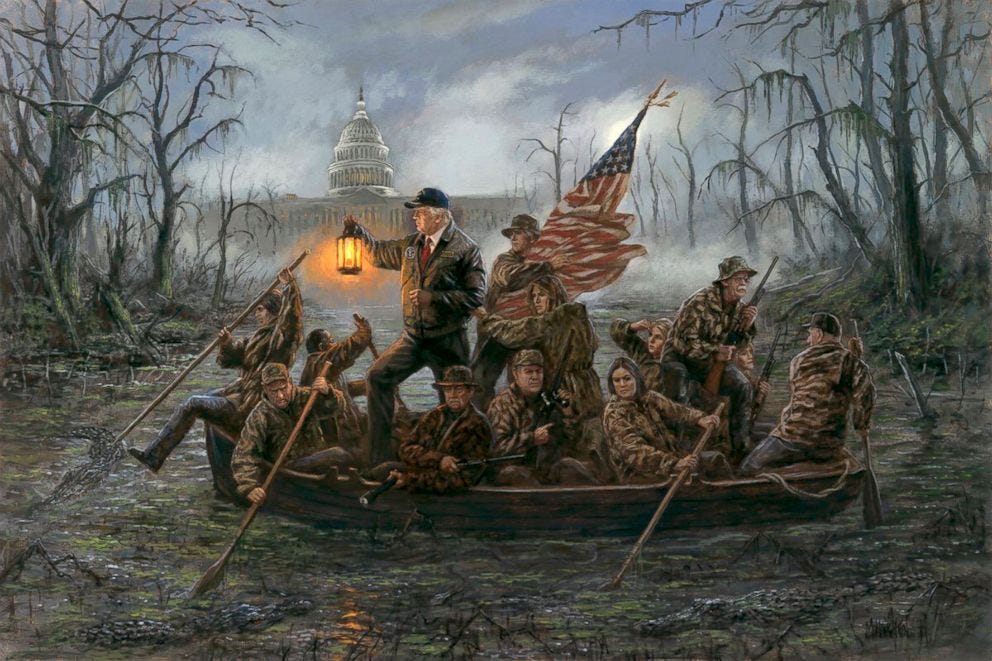
They call it the “Fourth Estate,” but these days it’s more like a foreclosed property auctioned off to the highest corporate bidder. Picture this: a once-mighty river of truth, now a stagnant bog where alligator-suited executives wallow in ad revenue, spewing bubbles of bias and half-truths that choke the life out of real stories. We’re not talking about some psychedelic fever dream—this is the cold, slimy reality of American journalism in 2026, where local papers fold like cheap lawn chairs and independents like me scratch for scraps while the swamp creatures feast.
As we discussed in our deep dive into Why Our Education System is Failing (Part 5: Education Access), an uninformed populace is easy to rule. But an uninformed populace without a local watchdog? That’s not a community; that’s a carcass for the vultures.
The Hard Truth: Journalism is a Public Good, Not a Corporate Piggy Bank
The “Free Press” was the only profession specifically protected by the Bill of Rights. The Founders weren’t being sentimental; they knew that without a persistent, annoying, and skeptical press, the “Greatest Democracy on Earth“ (see Episode 8: The Greatest Democracy on Earth Terms for the terms and conditions) would collapse into a heap of cronyism and graft.
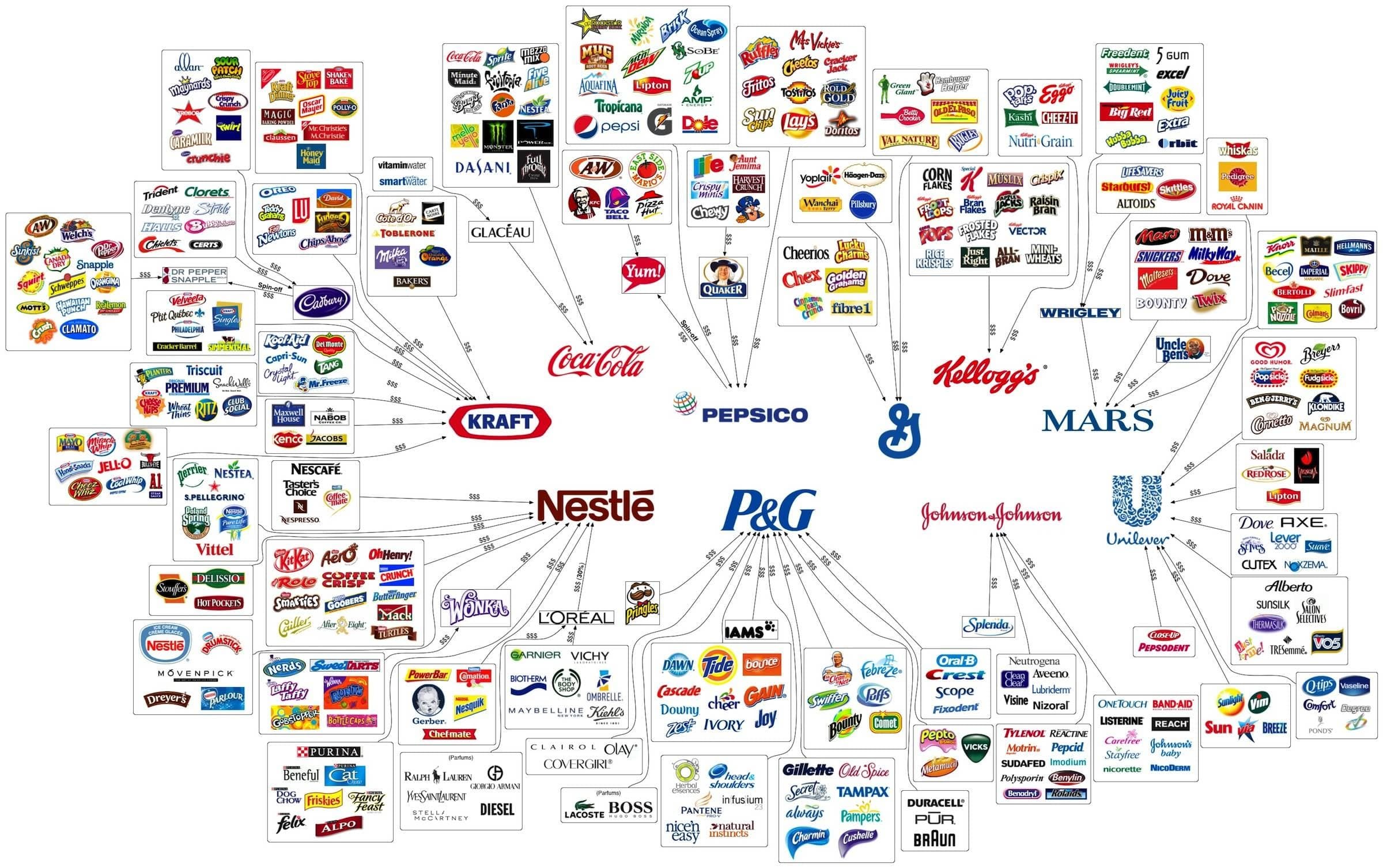
But we’ve treated the news like a commodity rather than infrastructure. We let hedge funds buy local papers, strip their real estate assets, fire 90% of the staff, and leave behind a “ghost paper” that prints wire stories and press releases. The mainstream media isn’t just biased; it’s bought and paid for, a corporate cartel churning out echo-chamber entertainment disguised as news. Local journalism, the lifeblood of accountability, is vanishing faster than ethics in a lobbyist’s briefcase, leaving “news deserts” where corruption blooms unchecked. To fix America, we must prioritize funding for local and independent journalism: through tax incentives, public subsidies, donor drives, and policy reforms that empower grassroots voices over conglomerate vampires. This isn’t charity—it’s survival. Without it, democracy devolves into a reality TV show where the audience loses every episode.
For more on systemic rot, check out my takes on why billionaires dodge taxes while we foot the bill (Part 3: Why Billionaires, Corporations Pay Almost No Taxes—We Pay More. How to Fix It).
Here is why the death of local media is an existential threat to your wallet and your freedom:
Hard Truth #1: The “Ghost Paper” and the Rise of Corruption
The Problem: When a local newspaper dies, municipal borrowing costs go up. This isn’t a guess; it’s data. Without a watchdog, local governments become less efficient and more prone to “sweetheart deals.” Study after study shows that taxes rise and government transparency plummets when the local reporter stops showing up to meetings. Following a newspaper closure, municipal borrowing costs increase by 5–11 basis points, costing the municipality an additional $650,000 per issue. Local papers are dropping like flies in a pesticide factory. Since 2005, America has lost nearly 3,500 newspapers—almost 40% of them—leaving over 210 counties as “news deserts” with zero local coverage. That’s 50 million people fumbling in the dark, reliant on national noise or social media sludge. Newspaper jobs? Down by two-thirds, or 43,000 souls since 2005. Without local watchdogs, corruption festers, voter turnout tanks, and communities crumble into echo chambers of ignorance.
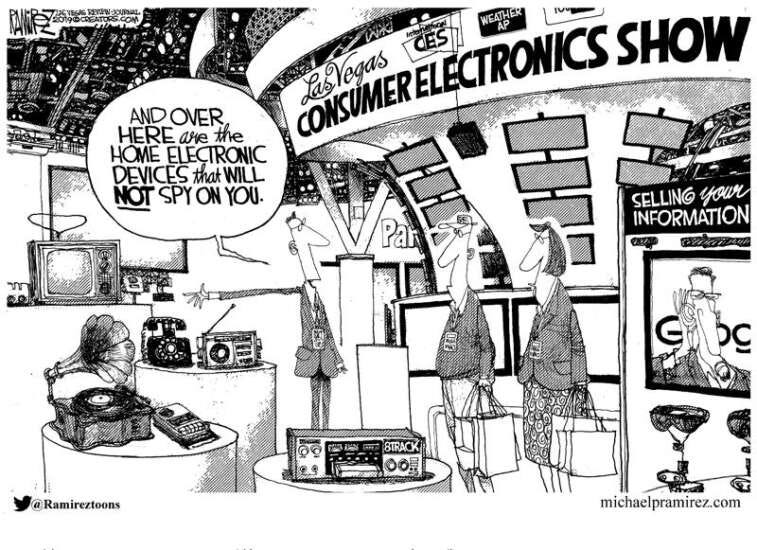
The Opinion: It’s like watching a bad acid trip where the “free press” hallucinates its own obituary. We’re not declining; we’re being euthanized by apathy and algorithms.
The Fix: Implement federal wage subsidies for local journalists, covering 35% of salaries like Canada’s model, to revive newsrooms. States like New York and Illinois are piloting this—expand it nationwide. Tie it to community engagement metrics, not profits, to ensure real impact. This could stem the bleed, boost civic participation, and save billions in unchecked government waste.
Hard Truth #2: The Hedge Fund Lobotomy
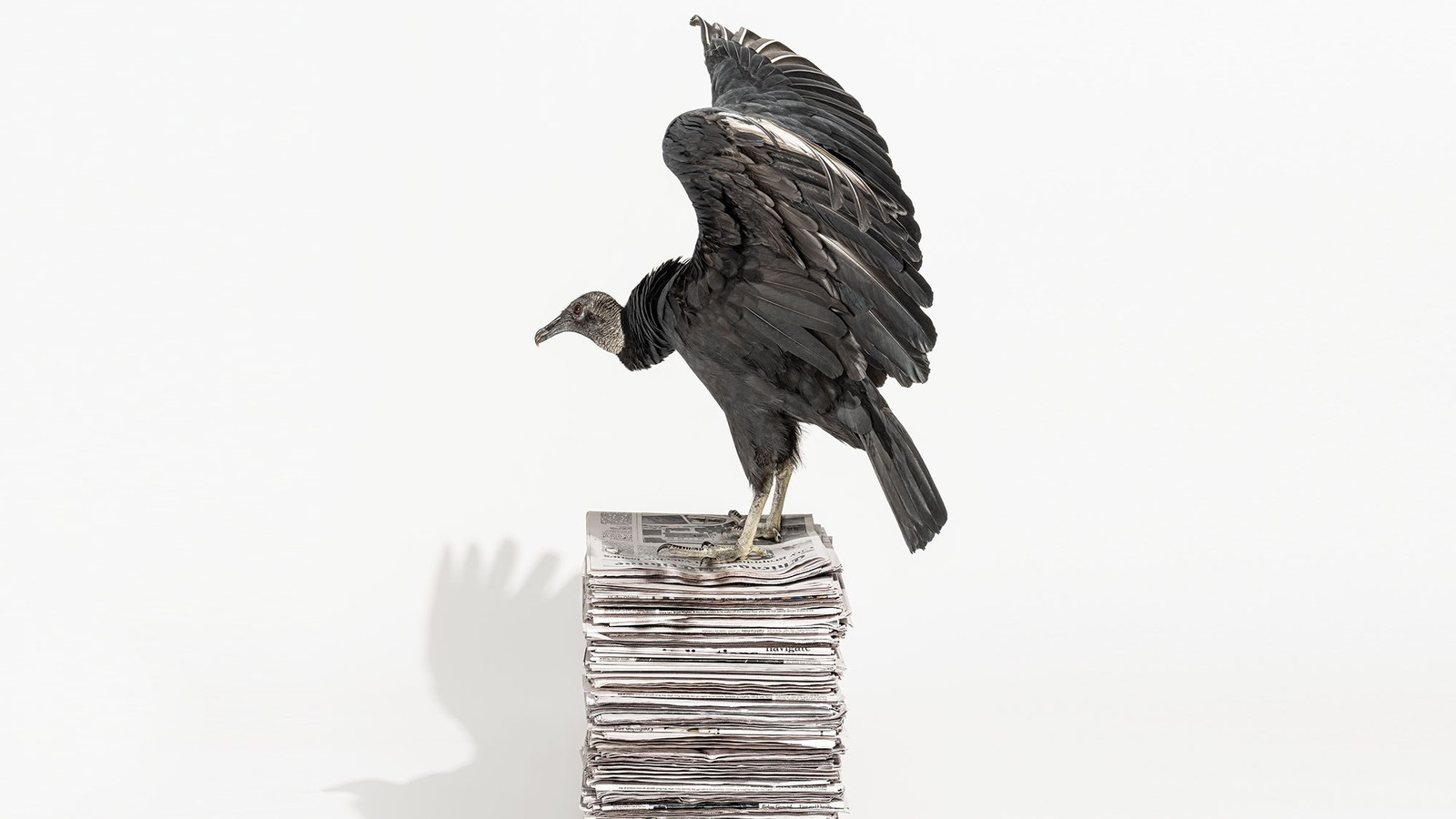
The Problem: Alden Global Capital and similar “vulture” funds have done more to destroy American discourse than any foreign bot farm. They don’t care about the truth; they care about the 20% profit margin they can squeeze out of a dying industry before they turn the lights off. A handful of conglomerates—think Sinclair, Nexstar, and Gray—gobble up stations and papers, slashing local content by up to 10% post-acquisition. This homogenization dumbs down news, amps up national polarization, and injects right-wing slant where none was before. Result? Less accountability, more echo, and a public starved of diverse perspectives.
The Fix: Revive antitrust enforcement to break up these behemoths, mandating local content quotas. Fund nonprofit alternatives via grants from outfits like the Independent Journalism Fund. Encourage co-ops like Defector or 404 Media for bundled, independent coverage. This rebuilds diversity, curbs bias, and fosters trust—key to mending America’s fractured discourse.
Hard Truth #3: Nationalization of Local Politics
The Problem: Because local news is disappearing, we view everything through a national lens. We treat a school board race like it’s a proxy war between Trump and Biden. This polarization is a direct result of the “Information Gap” being filled by national cable news—which, as George Carlin used to remind us, is just “entertainment for people who don’t like movies.” With local news gone, misinformation explodes. Studies show declining journalism boosts polarization, drops voter turnout, and erodes trust in institutions. Algorithms prioritize outrage over facts, filling the void with conspiracy sludge.
The Fix: Boost grassroots journalism through donor platforms like Patreon or Beacon, and public funds for fact-checking hubs. Mandate tech giants tax for journalism endowments, funding community-driven reporting. This combats lies, bridges divides, and revives civic engagement.
Hard Truth #4: The Algorithm vs. The Fact-Checker
The Problem: When local outlets vanish, the vacuum is filled by “Pink Slime” websites—automated, partisan sites that look like local news but are actually funded by dark money to pump out propaganda. Without independent journalism, the algorithm becomes your editor. And the algorithm doesn’t care if a story is true; it only cares if it makes you angry enough to click. Big media prioritizes sensationalism over substance, with mergers leading to homogenized, profit-driven content that ignores underrepresented voices. Bias creeps in, eroding trust—only 32% trust national news..
The Fix: Support independents via subscriptions to outlets like The Free Press (Bari Weiss) or Racket News (Matt Taibbi) on Substack. Push for transparency laws requiring disclosure of ownership biases. This empowers diverse narratives, rebuilding faith in media.

Hard Truth #5: The Erosion of Social Cohesion
The Problem: Local news is the “connective tissue” of a town. It’s where you find out about the high school play, the local charity drive, and the neighbor who needs help. Without it, we lose our sense of shared reality. We stop being neighbors and start being “demographics.” Independents like me scrape by on donations while facing burnout and low pay. Without stable funding, quality investigative work—labor-intensive and unprofitable—dies.
The Fix: Create hybrid models: grants from Pulitzer Center or Fund for Investigative Journalism, plus reader memberships. Advocate for tax credits on journalism donations. This sustains stewards, ensuring deep dives that hold power accountable.
Hard Truth #6: Suppression of Dissenting Voices—Silencing the Truth-Tellers
The Problem: Platforms and pressures marginalize independents, reducing visibility and amplifying mainstream echo..
The Fix: Build networks like Freelance Solidarity Project for collective bargaining. Use Substack collectives (e.g., Zeteo by Mehdi Hasan) for amplified reach. This protects voices, fostering pluralism.
Hard Truth #7: Lack of Diversity in Ownership—Monoculture Media
The Problem: Consolidation excludes minority owners, leading to biased coverage that ignores vulnerable communities.
The Fix: Grants for diverse independents via Kapor Foundation or Greater Good Science Center. Policies favoring minority-owned outlets in subsidies. This enriches narratives, promoting equity.
The Billionaire Problem (Again)
In Episode 3 of this series, we looked at how the ultra-wealthy avoid contributing to the public coffers. The same logic applies here. Many billionaires buy legacy outlets (The Washington Post, The LA Times) as “vanity projects” or shields for their other interests. While a benevolent billionaire is better than a malevolent hedge fund, democracy should not depend on the whims of a king.
The Blueprint for a Resilient Press
We cannot go back to the 1990s. The advertising model that funded journalism for a century is dead, buried by Google and Meta. If we want a free press, we have to build a new foundation.
Support Non-Profit Newsrooms: Outlets like ProPublica and the Texas Tribune have proven that investigative journalism can thrive on a donor-supported, non-profit model. They aren’t beholden to shareholders; they are beholden to the truth.
The Substack Revolution: We are seeing a renaissance of independent voices. Writers like Matt Taibbi, Heather Cox Richardson, The Free Press, they have been great and within a year or two Matt, heather, and Bari are all welcome guests on my show. They have been proving that people will pay for journalism that isn’t filtered through a corporate PR department. I'm going to Finland and developed a podcast version of this that turns into the show so we can see what Charisma, irreverence, and intelligence look like when they're combined.
Public Funding (Without Government Control): We need to treat local news like the BBC or NPR—publicly funded but firewalled from political interference. Tax credits for local news subscriptions would be a massive first step.
Anti-Trust Action: Break the stranglehold that Big Tech has on digital advertising. If Google makes billions off the snippets of news produced by starving reporters, Google should pay into a fund that supports those reporters.
You: The Direct Sponsor: Stop expecting the “truth” to be free. If you value your community, spend the $5 a month on a local independent outlet or a Substack journalist who is actually doing the work.
“Stripped for Parts”: A deep dive into how hedge funds like Alden Global Capital are killing newspapers.
How the loss of local newspapers is fueling political divisions in the U.S.
Final Word
And finally, we have to talk about the “Free” in Free Press. For thirty years, the internet promised us we’d never have to pay for information again, and we fell for it like a toddler for a shiny nickel. We decided that news should be like oxygen—all around us and totally free—while we happily shelled out six bucks for a cup of burnt bean water at Starbucks.
But here’s the thing: when you don’t pay for the product, you are the product. Or worse, the product becomes whatever a hedge fund manager in a Greenwich mansion says it is. We spend our time doom-scrolling through national outrage-bait because it’s “free,” while our local school boards are being strip-mined by consultants and our property taxes are being hiked to cover “sweetheart deals” we never heard about because the local reporter was laid off five years ago.
We’re living in a country where people know exactly what a Kardashian had for lunch but couldn’t tell you who their own Mayor is. That’s not a functioning society; that’s a fan club with nukes. If you want a watchdog, you have to feed the dog. You can’t complain that the Fourth Estate is a “swamp” when you’ve spent the last decade refusing to pay the water bill.
So, either put up the price of a Netflix subscription for an independent outlet, or get ready to live in a town where the only thing being “investigated” is why your local park is suddenly a parking lot for a luxury condo. You get the democracy you pay for, and right now, we’re all looking for the “skip ad” button on our own survival.
Support Independent Truth-Telling: Join the Revolution at Rxan Smith Uncomfortable
This series isn’t for the faint of heart—it’s for people who can handle the truth, raw and unfiltered. At rxansmith.substack.com and YouTube.com/@RealRxanSmith, I deliver independent commentary on government and systemic failures without catering to the left or right. No echo chambers here—just facts backed by rigorous research. I try my best to keep opinions at bay, letting the data speak for itself, because real change starts with uncomfortable realities.
I’m shamelessly plugging myself because if it can be done, it can be done my way: honest, evidence-based, and aimed at sparking revolutions in how we think and act. A lot of folks chase viral fame, but I’m here to game the algorithms for good—turning your support into Google ads that boost exposure, draw in more truth-seekers, and amplify the voices of my Substack network and podcast collaborators. We’re stringing together episodes to build a movement, one hard truth at a time.
This is engineered for impact, drawing from best practices across the web on effective fundraising without the BS. Your donations and subscriptions aren’t just support—they’re fuel for growth, ensuring these messages reach the masses and drive real change. If you’re ready to back independent journalism that holds power accountable, subscribe now or donate to keep the uncomfortable conversations flowing. Together, we can make America wake up and fix itself. Stay uncomfortable—it’s the only way forward.
Next Up: Episode 14: Addiction: Taking Crime & Stigma to Public Health Crisis.
Join the fight: Subscribe to rxansmith.substack.com for more uncomfortable truths, and check out my rants on YouTube.com/@RealRxanSmith. If you found this essay valuable, please consider a paid subscription to support independent, adversarial journalism. Stay Uncomfortable.
Next Up — Episode 14: The Military-Industrial Complex’s Grip on the Budget.
Connect With Rxan Smith Across the Web
📺 YouTube🐦 X (Twitter)📸 Instagram (Main)📸 Instagram (Alt)🧵 Threads (Main)🧵 Threads (Alt)📘 Facebook☕ Buy Me a Coffee💰 PayPal🎭 Patreon
25 Fixes Make America Grow Again (Full List)
rxansmith.substack.com · YouTube: @RealRxanSmith · X: @rxannsmith
— Rxan Smith
Uncomfortable
Making America Grow Again, One Uncomfortable Truth at a Time
━━━━━━━━━━━━━━━━━━━━
© Rxan Smith. All rights reserved